Categories
Uncategorized

Learning about SQL Rollups: Simplifying Data Aggregation

Understanding SQL Rollup

SQL Rollup is a tool used in database queries to summarize data and calculate subtotals and grand totals efficiently. It allows for various levels of aggregation within a hierarchy, simplifying complex data into more digestible forms.

Defining Rollup

Rollup is an extension of the SQL GROUP BY clause. It simplifies data analysis by providing aggregate data across multiple dimensions.

For instance, when dealing with sales data for various products, Rollup can compute subtotals for each product category and a grand total for all sales.

This is beneficial in organizing and interpreting large datasets.

The syntax usually involves listing columns in a hierarchy, such as ROLLUP(A, B, C), where SQL processes the data by grouping and aggregating based on this order. This creates multiple grouping sets, which include all possible combinations of these columns, along with the overall total.

The Purpose of Rollup in SQL

Rollup serves the essential function of data aggregation. When a database contains hierarchical data, Rollup efficiently computes subtotals at each level of the hierarchy.

For example, in a sales report, it can generate totals for each region, then for each country within a region, and finally a grand total for all regions. This is particularly useful for reports that require data to be summed up at different levels.

The SQL ROLLUP also aids in generating these comprehensive reports by calculating necessary subtotals and the grand sum without manually writing multiple queries, thus saving time and reducing complexity.

SQL Rollup Syntax

The SQL Rollup provides a way to create summaries in query results by adding subtotals and grand totals. Understanding its syntax helps users create efficient data aggregations and can be particularly useful in reporting scenarios.

Basic Rollup Syntax

In SQL, the Rollup syntax is used within the GROUP BY clause. It allows the user to generate summary rows in the result set. The basic format is as follows:

SELECT column1, column2, aggregate_function(column3)
FROM table_name
GROUP BY ROLLUP (column1, column2);

When using Rollup, it processes columns inside the parentheses from left to right. This generates aggregate data, like subtotals, for each level of hierarchy in those columns. The final result includes these subtotal rows and a grand total row, if applicable.

Mastering this syntax enables analysts to quickly produce complex reports.

Rollup with Group By Clause

When using Rollup with a GROUP BY clause, the Rollup is an extension that simplifies creating multiple grouping sets. While a regular GROUP BY groups the data by each unique set, adding Rollup expands this by including additional subtotal rows for each level and a grand total.

The Rollup option does not produce all possible combinations of groupings like the CUBE function. Instead, it controls the hierarchical grouping, ensuring efficient computation.

In SQL Server, it’s important to note that Rollup uses existing columns and extends their groupings without changing the original order. This feature makes it a valuable tool for summarizing complex datasets efficiently in business environments.

Working with Aggregate Functions

In SQL, aggregate functions like SUM, COUNT, and AVG are powerful tools for summarizing large datasets. These functions, combined with ROLLUP, can generate important insights, such as subtotals and grand totals, to aid decision-making.

Using Sum with Rollup

The SUM function is essential for adding values in a dataset. When used with ROLLUP, it can provide both subtotals for groups and a grand total. This feature is useful for generating sales reports or financial summaries.

For instance, to calculate the total sales per product category and overall, the query might look like this:

SELECT category, SUM(sales)
FROM sales_data
GROUP BY ROLLUP(category);

In this example, each category’s total sales are calculated, and ROLLUP adds an extra row showing the total sales for all categories combined. This method simplifies understanding of both detailed and aggregate sales figures, making data evaluation more efficient.

Count, Avg, and Other Aggregates

Aggregate functions such as COUNT and AVG also benefit from using ROLLUP. The COUNT function is used to tally items in a dataset, while AVG calculates average values.

For example, using COUNT with ROLLUP helps analyze customer visits per store, then add a grand total of all visits:

SELECT store, COUNT(customer_id)
FROM visits
GROUP BY ROLLUP(store);

Similarly, AVG with ROLLUP provides average sales data per region, with an overall average row. These applications are invaluable in identifying trends and assessing performance across categories. By leveraging these functions with ROLLUP, SQL users can efficiently interpret various data points.

Hierarchical Data and Rollups

In SQL, the handling of hierarchical data often involves organizing data into different levels. This organization can make data analysis more structured and meaningful. Rollups play a crucial role in this process by simplifying the generation of summary rows for various levels within a hierarchy.

Understanding Hierarchical Aggregation

Hierarchical aggregation involves arranging data into a parent-child structure. This is common in business settings where information is segmented by categories such as regions, product types, or time periods. SQL Rollup can simplify aggregating data at each hierarchical level, providing subtotals that enhance decision-making.

For example, in a sales database, employees might be grouped by department, and those departments grouped by region. Using Rollup, SQL can automatically calculate totals at each level. This includes department sales within each region and overall sales for all regions. The Rollup feature in SQL extends the GROUP BY clause, allowing you to see these various levels without manual calculations.

Rollup with Hierarchical Categorization

Rollup is especially useful when data is categorically hierarchical, meaning categories exist within other categories. By using Rollup, users can define data groupings and easily generate reports that include both subtotals and grand totals.

In a retail scenario with products categorized by electronics, each electronic type might further split into brands. With SQL Server Rollup, this hierarchy can be represented efficiently, by summarizing sales figures first by electronic type, then by individual brand, and finally, for total electronic sales. This layered aggregation helps businesses understand performance across different dimensions without complex SQL queries. To learn more about SQL Rollups, visit SQL Server ROLLUP with simple examples for a practical application of these concepts.

Using Rollup for Subtotals and Grand Totals

In SQL, the ROLLUP function helps to create subtotals and a grand total row when dealing with grouped data. This can be particularly useful for analyzing sales data where aggregated results are necessary for decision-making.

Generating Subtotals

When using ROLLUP in SQL, subtotals are generated by applying aggregate functions on grouped data. For instance, in a sales database, if data is grouped by product and then by month, ROLLUP can calculate the sum of sales for each month per product.

To implement this, the query will use the GROUP BY clause with ROLLUP to create grouping sets. This results in subtotals for each category, detailing how much each product sold per month.

For example, the SQL snippet might look like:

SELECT Product, Month, SUM(Sales) AS TotalSales
FROM SalesData
GROUP BY Product, Month WITH ROLLUP;

This query aggregates sales while showing subtotals for each product. The sub-total rows reveal insights about sales distribution across different time periods.

Calculating Grand Totals

The grand total row is added at the end of the result set using ROLLUP. This row gives an overall sum of all sales figures included in the data set. A grand total helps in understanding the complete picture, summing up sales across all categories.

In the previous example, as the query processes the groups, ROLLUP computes and includes a final grand total row. This includes the cumulative sales data without any specific grouping column labels, effectively showing the sum for the entire data set. Implementation of this approach aids decision-making by providing a comprehensive view of total sales performance.

Advanced Rollup Operations

A laptop displaying SQL code with a series of rollup operations and a notebook with handwritten notes beside it

Advanced Rollup operations in SQL allow users to create reports with various levels of aggregation. By mastering these techniques, one can efficiently summarize data and generate comprehensive insights for data analysis.

Partial Roll-ups

A partial roll-up focuses on summarizing data for a specific subset of columns. This allows the user to gain insights without needing a full roll-up, which can be especially useful when dealing with large datasets. The rollup operator extends the GROUP BY clause, generating super-aggregate rows at different levels.

The partial roll-up can be achieved by specifying fewer columns than usual. For instance, applying a roll-up on columns A and B but not C allows results to show totals for different combinations of A and B, without aggregating C. This behavior resembles the flexibility provided by grouping sets, and it is useful in complex queries where certain dimensions need more focus than others.

Rollup Combined with Cube

Combining rollup with a cube operation offers even broader insights, as it allows for aggregation across multiple dimensions. While a rollup provides a hierarchical level of data aggregation, a cube offers a comprehensive cross-tabulation of all possible combinations.

Using both operators, one can gain a complete picture of how different factors influence the metrics being analyzed. The rollup operator simplifies hierarchical data, while the cube allows for a more detailed cross-section. Such operations are valuable in scenarios where businesses require detailed reports involving various factors. Combining these techniques can help achieve a balanced mix of aggregated data without overwhelming complexity.

Group By Enhancements with Rollup
A computer screen displaying SQL rollup queries and data visualizations

The Group By clause in SQL can be enhanced using Rollup, which is used to create subtotals and grand totals. These functionalities help in making complex data analysis easier and more streamlined.

Grouping Sets and Rollup

A grouping set is a tool that enhances the Group By statement by allowing multiple groupings in a single query. It is especially helpful in SQL Server for simplifying aggregate calculations. The Rollup option expands the capabilities of grouping sets by automatically calculating subtotals along with the final grand total.

In MySQL, the Rollup modifier can be added to the Group By clause to enhance multi-level data analysis. By using Rollup, SQL queries can generate additional rows showing the subtotal of each grouping set, thus providing more detailed summaries of data.

Group By with Super-aggregate Rows

The Rollup function is a powerful extension of the SQL Group By clause. It not only helps in grouping data but also in creating super-aggregate rows, which include various dimensions and hierarchical levels. These rows represent subtotals of grouped data, and the final row is the grand total.

Using Rollup in SQL Server, users can streamline data analysis by combining different dimensions. The grand total row is particularly useful for overseeing overall data trends. When used correctly, it can greatly enhance the clarity and depth of data analysis within a single SQL query.

Implementing Rollup in SQL Databases

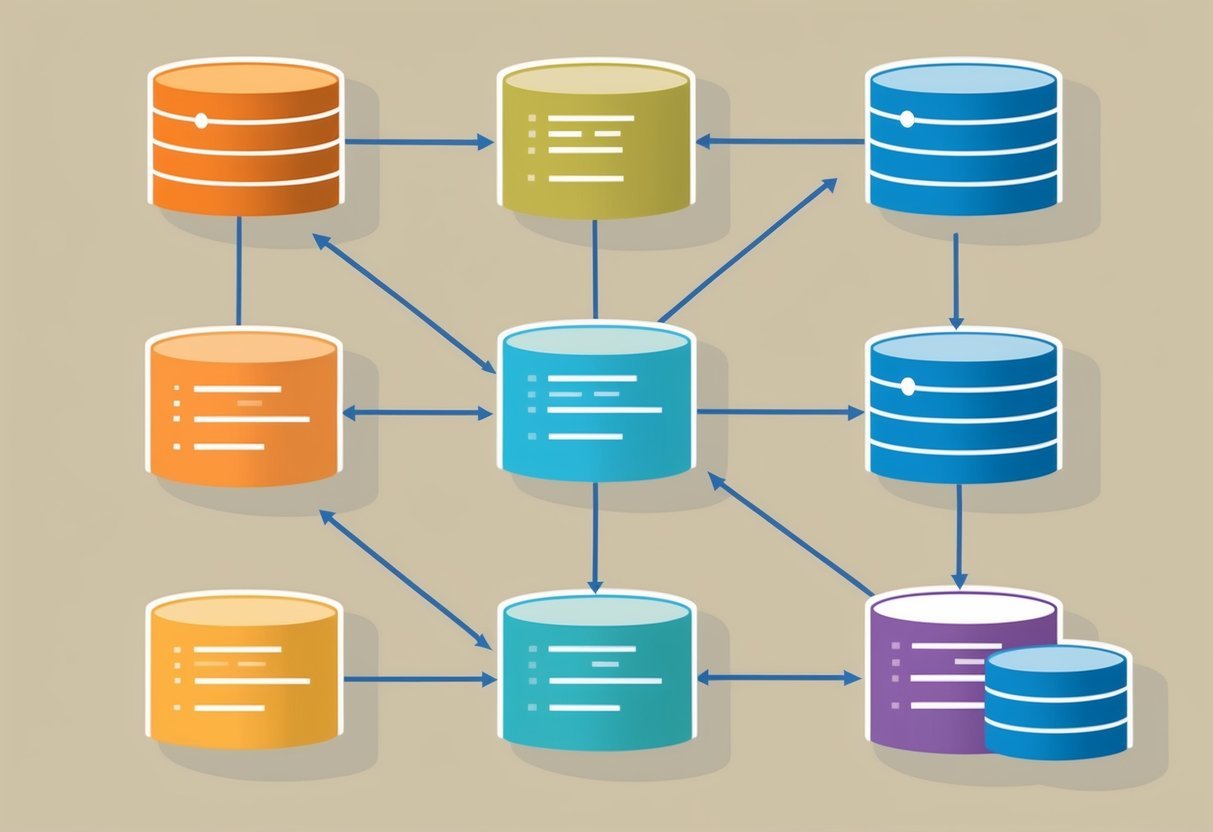
A database diagram with tables and columns, showing the implementation of SQL Rollups

SQL Rollup is an important tool for generating detailed reports by summarizing data. It extends the functionality of the GROUP BY clause, making it easier to calculate subtotals and grand totals in databases like Microsoft SQL Server and MySQL.

Rollup in Microsoft SQL Server

In Microsoft SQL Server, the Rollup is a subclause that simplifies generating multiple grouping sets. When an SQL query includes a Rollup, it creates summary rows, providing subtotals and a grand total row. This allows users to quickly analyze different levels of data aggregation within a single query.

For example, consider a sales table. By using Rollup, one can calculate total sales for each product category along with a cumulative total. This reduces the number of queries needed and increases efficiency.

Rollup is ideal for creating hierarchical reports that need different granularities of data.

Rollup in MySQL and Other Databases

In MySQL, Rollup is also used to generate aggregated results with subtotals and a grand total. Implementing Rollup in MySQL involves adding the Rollup operator to the GROUP BY clause in an SQL query, allowing the extension of summary data efficiently. This is especially useful for databases that require data to be grouped by different dimensions.

Rollup can provide insights by showing detailed data alongside summaries for evaluation. For other databases, the process might vary, but the core functionality remains consistent.

Ensuring that queries are well-structured can make data analysis more intuitive and informative.

Filtering Aggregated Data

A computer screen displays a database query with aggregated data, while a chart visualizes SQL rollups

When working with SQL Rollups, filtering the aggregated data correctly is crucial. This process often involves using specific clauses to refine results and ensure meaningful data presentation.

Using Having with Rollup

The HAVING clause is a vital tool when filtering aggregated data in SQL, especially when using Rollup. Unlike the WHERE clause, which filters rows before aggregation, the HAVING clause applies conditions after data aggregation. This allows users to set conditions on the result of aggregate functions like SUM or COUNT.

For instance, when calculating total sales per product, HAVING can be used to show only those products with sales exceeding a specific threshold. This approach is useful in scenarios where users want to highlight significant data points without being affected by less relevant information.

Understanding the distinction and correct application of HAVING ensures precise data filtering after running rollup operations, which helps in generating cleaner and more readable reports.

Order By and Rollup

The ORDER BY clause enhances data presentation by arranging the output in a specified sequence. When combined with Rollup, it becomes even more powerful. This clause helps in sorting the final result set of aggregated data, allowing for easy comparison and analysis.

For example, after using Rollup to get sales totals per product, ORDER BY can sort these subtotals in either ascending or descending order. This clarity aids users in identifying patterns or trends within the dataset more quickly.

It is important to remember that logical sorting enhances the overall understanding of data, making it a key part of data analysis tasks.

Incorporating ORDER BY effectively ensures that the result set is not only complete but also arranged in a way that enhances interpretation and presentation.

Rollup in Business Intelligence Reporting

A stack of SQL textbooks surrounded by colorful charts and graphs

SQL rollups are essential in business intelligence for simplifying data and presenting clear insights. They’re used to create structured reports, analyzing sales trends, and streamlining inventory management by facilitating aggregate data analysis.

Constructing Sales Reports

In crafting sales reports, SQL rollups help summarize data by various dimensions, such as year, category, and region. This technique allows organizations to assess trends efficiently.

For example, a rollup can show sales by year, breaking down numbers into more detailed views, like sales by quarter or month, providing a clear timeline of performance. This enables businesses to evaluate seasonal trends and allocate resources effectively.

Additionally, analyzing sales by category can identify which products or brands are driving growth. It can highlight the success of specific marketing campaigns or the performance of various departments.

Rollups allow a detailed comparison of these dimensions, contributing to strategic decision-making by focusing on what’s most important.

Finally, using rollup in sales reports aids in constructing comprehensive dashboards that reflect key business insights, offering a bird’s-eye view while retaining the ability to drill down into specifics.

Rollup and Inventory Analysis

Rollup usage is significant in inventory management as well. It aggregates data across product lines, helping optimize stock levels. By summarizing data on stock counts by category or brand, managers can make informed decisions about restocking and discontinuation.

For example, understanding inventory levels across multiple locations can prevent stockouts and reduce excessive stock, saving costs.

Departments responsible for managing inventory can use rollups to analyze patterns, such as which items frequently run out or those with surplus stock. This is crucial for meeting demand without overstocking, which ties up capital.

Additionally, rollups can assist in forecasting future inventory requirements by analyzing past sales patterns and inventory turnover rates. They enable more precise predictions about which products need more attention in terms of supply chain and logistical planning.

Data Analysis with SQL Rollup

A computer screen displaying SQL code with rollup functions

SQL Rollup is an advanced feature that enhances data analysis by allowing efficient aggregation across multiple dimensions. It streamlines the reporting process and improves the ability to perform detailed data insights.

Multi-level Analyses

The rollup operator is integral for performing multi-level analyses in SQL queries. It functions by creating a series of subtotals that lead to a grand total, helping to break down complex data into more understandable parts.

For instance, in sales data, it can offer aggregated totals by product, month, and year. This technique saves time by eliminating the need for multiple queries for summary results, as seen in projects such as the SQL Pizza case study.

Using aggregate functions like SUM or AVG in ROLLUP operations helps generate different levels of aggregation. These functions allow users to gain valuable insights without extensive manual calculations.

The ROLLUP feature benefits businesses by offering summarized views that support informed decision-making.

Data Insight and Reporting Efficiency

The ROLLUP operator improves the reporting process by providing hierarchical grouping and easy-to-read insights. It efficiently handles large datasets by automatically grouping and summarizing data, which simplifies complex analyses.

For example, it can condense multiple sales metrics into summary tables, enhancing reporting efficiency.

By using the ROLLUP feature, businesses can not only save time but also improve accuracy. It removes the need for repetitive coding, making reports more efficient and insightful.

This structured approach allows analysts to focus on interpreting data trends rather than spending excessive time on data preparation.

Frequently Asked Questions

A stack of books on SQL with a magnifying glass and a pencil

The ROLLUP operation in SQL enables efficient data analysis by creating hierarchical summaries. It serves different purposes than the CUBE operation and is useful in situations where simple aggregation is needed over specific dimensions.

How does the ROLLUP operation function within GROUP BY in SQL?

The ROLLUP operation works as an extension of the GROUP BY clause in SQL. It allows for aggregated results to be calculated across multiple levels of a dimension hierarchy. By adding ROLLUP to GROUP BY, SQL creates subtotal and grand total summaries for the specified columns.

Can you provide an example of using ROLLUP in SQL?

Consider a sales database for an electronics store. Using ROLLUP, you can generate a report that includes sums of sales for each product category and a grand total.

For example, SELECT Category, SUM(Sales) FROM SalesData GROUP BY ROLLUP(Category) produces subtotals for each category and a single grand total row.

What is the difference between ROLLUP and CUBE operations in SQL?

While ROLLUP generates subtotal rows moving upwards in a hierarchy, CUBE provides a broader analysis. CUBE calculates all possible combinations of aggregations based on the given columns, effectively creating a multi-dimensional summary. This results in more detailed and varied grouping compared to ROLLUP.

What are the primary purposes of using a ROLLUP in SQL queries?

ROLLUP is primarily used for generating hierarchical data summaries. It helps in creating reports that include intermediate totals and a grand total, making it simpler to understand aggregated data.

This feature is essential for producing business reports and financial summaries where clarity and detail are necessary.

In what scenarios is it preferable to use ROLLUP over CUBE in SQL?

ROLLUP is preferable in scenarios where a straightforward hierarchy or a step-by-step summarization is needed. It is particularly useful when dealing with reports that require fewer aggregate calculations, such as sales by month followed by a yearly total, without needing all possible group combinations like CUBE.

How does the ROLLUP operation impact the result set in a SQL GROUP BY clause?

Using the ROLLUP operation, the result set from a GROUP BY clause includes additional rows for subtotal and total summaries. These rows contain aggregated data that are not available in a standard GROUP BY query.

This simplifies data analysis by providing clear insights at different levels of aggregation.
Categories
Uncategorized

Learning about Linear Regression – Residual Plots: A Clear Guide to Visualization

Understanding Linear Regression

Linear regression is a key statistical method used in data science to model the relationship between variables. It helps predict the value of a dependent variable based on one or more independent variables.

Concepts of Linear Regression

Linear regression focuses on establishing a linear relationship between variables. The regression model is expressed as an equation where the dependent variable, often called the response variable, is predicted from independent variables or predictor variables.

The result is a straight line that best fits the data points, known as the line of best fit.

This method is widely used because of its simplicity and efficiency. The slope of the line indicates the strength and direction of the relationship between the variables. Researchers use this information to make data-driven decisions, like estimating trends over time or understanding how changes in predictors influence the response.

Assumptions of Linear Regression

Linear regression comes with several assumptions that must be satisfied for the model to provide valid results.

Linearity assumes a straight-line relationship between predictor and response variables. This can be verified through scatter plots or residual plots.

Another assumption is independence, which means observations are not related to each other, ensuring accuracy in predictions.

Homoscedasticity is another important assumption, meaning that the variance of residuals is consistent across all levels of the independent variables. Lastly, the normality of residuals suggests that they should approximately follow a normal distribution.

These assumptions are critical to verify when using linear regression to avoid misleading conclusions.

Diving into Residuals

Residuals play a crucial role in understanding linear regression models. They help reveal how well a model fits the data and highlight any potential issues affecting accuracy. This section explores the definition of residuals and their significance in regression analysis.

Defining Residuals

Residuals are the differences between observed values and predicted values generated by a regression model. When a regression line is drawn through data points, it represents the best-fitted values for that dataset. However, not all data points will lie perfectly on this line.

Residuals are these vertical distances: calculated by subtracting the predicted value from the observed value for each data point.

Residuals provide insight into the level of error in a model. A smaller residual indicates that a predicted value closely matches the observed value, while larger residuals suggest greater inaccuracies.

Residuals can help identify outliers, points that significantly deviate from the expected pattern of the regression line. Such deviations could indicate that other variables might influence the data or that the model needs adjustment.

The Role of Residuals in Regression

Residuals are vital in evaluating the effectiveness of a regression model. They are used in residual analysis, which examines the distribution and pattern of these errors.

A good model will have residuals that are randomly distributed with no discernible pattern. If the residuals display a pattern, it can suggest issues like non-linearity, heteroscedasticity, or model misspecification.

Residual plots, graphical representations of residuals, help assess these aspects visually.

For example, patterns such as a funnel shape in a residual plot may indicate heteroscedasticity, where the variance of errors differs across observations. Consistent residuals can highlight a need for using different techniques or transformations to improve model fit.

Residual analysis aids in enhancing model accuracy and ensuring the reliability of conclusions drawn from regression.

Exploring Residual Plots

Residual plots are essential tools in analyzing linear regression models. They offer valuable insights into the suitability of the model by showing how residual values are distributed and if any patterns exist.

Purpose of Residual Plots

Residual plots serve as a graphical representation of the differences between observed and predicted values in regression models. By plotting residual values against the predicted values or independent variables, one can assess the adequacy of a linear regression model.

Using these plots, one can detect non-linearity, identify heteroscedasticity, and pinpoint influential data points that might affect the model’s accuracy. A plot with a random pattern suggests that the model is appropriate, while visible patterns indicate potential issues.

Interpreting Residual Plots

When interpreting a residual plot, several factors are taken into account. A scatter plot of residuals should appear randomly distributed with no clear patterns for a well-fitting model.

Patterns like a funnel shape could suggest heteroscedasticity, where the variance of errors changes across levels of independent variables.

Symmetry around the horizontal axis is a desirable property. It implies that errors are evenly distributed, confirming the model’s assumptions. Observing clustering or systematic trends might suggest model inadequacies or that important predictor variables are missing.

Checking for these aspects enhances residual plot analysis and ensures the model’s reliability in predicting outcomes.

For more insights on how these characteristics are crucial in regression models, you can explore resources like this comprehensive guide.

Elements of a Residual Plot

Residual plots are essential for assessing linear regression models. They help identify patterns and outliers that might indicate issues with the model. Recognizing these elements is crucial to ensure model accuracy.

Detecting Patterns in Residual Plots

A residual plot shows the residuals on the y-axis and the fitted values on the x-axis. An ideal residual plot displays a random pattern. This randomness suggests that the model is capturing all systematic information, and errors are randomly distributed.

Patterns to watch for:

  • Linear patterns: May suggest that a linear relationship is not suitable.
  • U-shaped patterns: Can indicate issues like missing variables or incorrect model form.
  • High density of points close to the zero line typically indicates a good model fit. Consistency across the horizontal line without forming a clear pattern is key.

A random scatter around the horizontal axis is one of the main characteristics of a good residual plot.

Identifying Outliers and Leverage Points

Outliers appear as points that do not follow the trend of the other points. These points can influence the regression line and skew results.

  • Outliers: They can distort the model’s predictions and need careful consideration. Identifying them requires looking for points far from the zero line.
  • Leverage points: Unlike typical outliers, these are influential points with high leverage, usually located far from the mass of other data points in terms of x-values. They have the potential to greatly affect the slope of the regression line.

Addressing outliers and leverage points ensures a more reliable model, as these points can lead to biased conclusions if not handled properly.

Statistical Software Tools

Python offers powerful tools for statistical analysis and visualization. Libraries such as Seaborn and Statsmodels stand out by providing robust capabilities for linear regression and residual plot analysis.

Introduction to Python Libraries

Python is widely used in data science due to its extensive collection of libraries for statistical analysis.

Numpy is foundational, offering support for arrays and matrices and many mathematical functions. This support is crucial for handling data sets efficiently.

Another essential library is Matplotlib, which works seamlessly with Numpy for plotting graphs. This makes it easier to visualize complex data relationships and trends.

By leveraging these libraries, users can perform linear regression analysis and create residual plots that illuminate the performance of their data models without diving into overly complex computations.

Utilizing Seaborn and Statsmodels

Seaborn is built on top of Matplotlib, providing a high-level interface for drawing attractive and informative statistical graphics. It simplifies the process of creating residual plots and enhances the visual appeal of data visualizations.

On the other hand, Statsmodels offers a plethora of classes and functions to explore data and estimate statistical models. It also provides built-in functionality for regression analysis, making it easy to assess model assumptions via residual plots.

Using Seaborn and Statsmodels together allows users to effectively analyze and present their regression results, making insights more accessible to non-technical audiences. The combination of these tools offers a comprehensive environment for statistical modeling in Python.

Assessing Model Fit

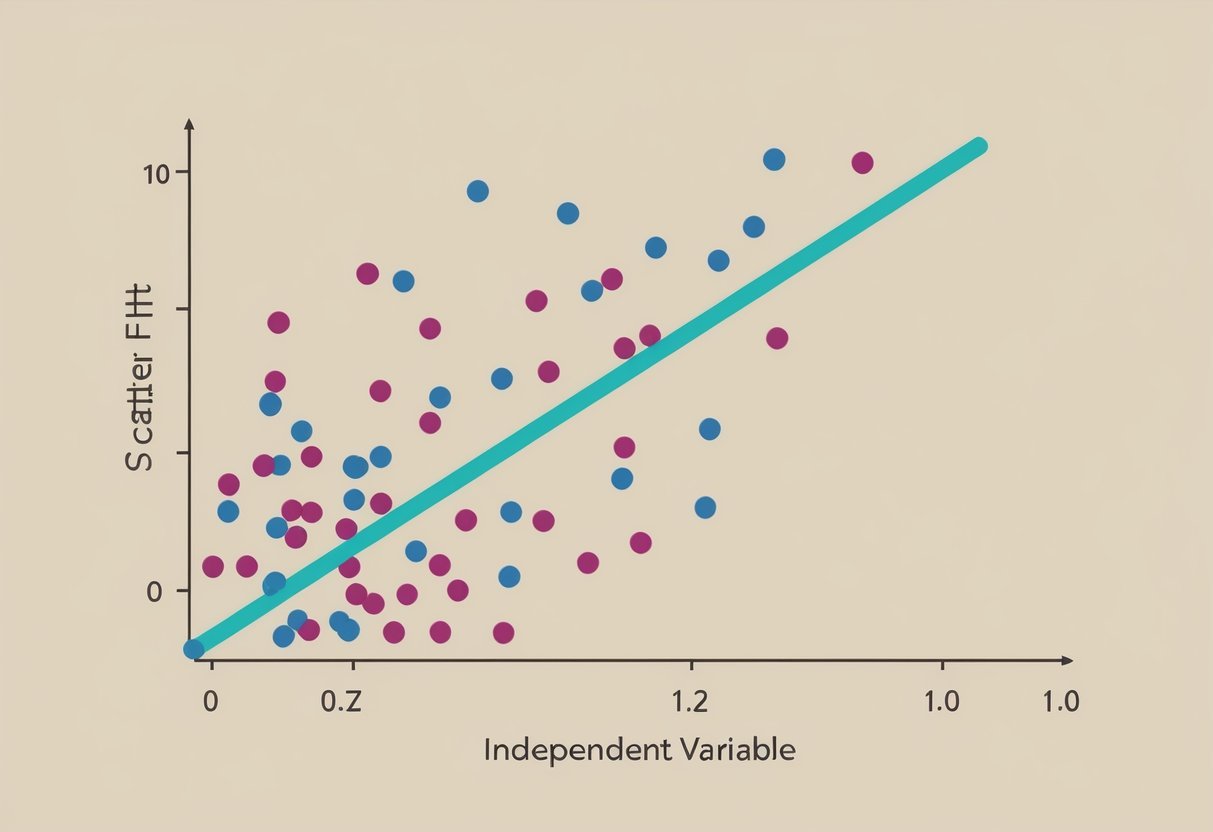
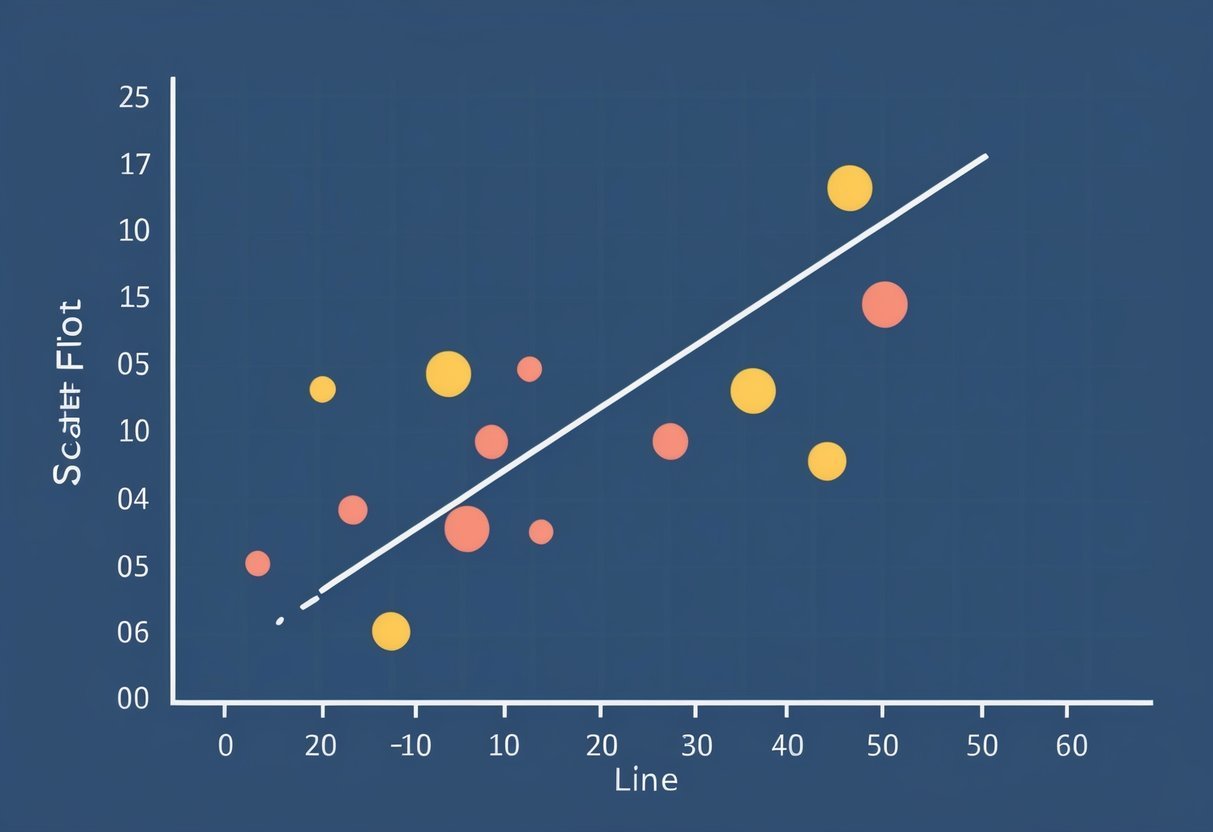
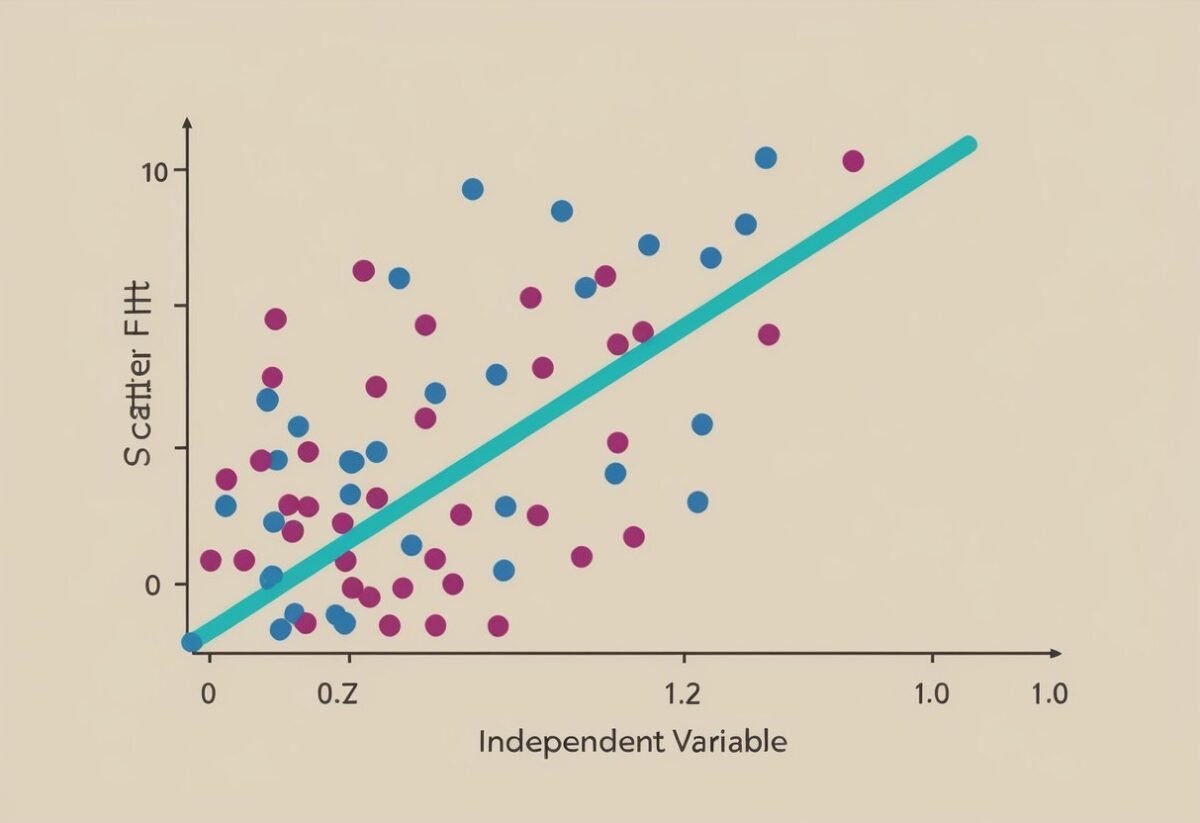
A scatter plot with a line of best fit and residual points scattered around it, showing the relationship between the independent and dependent variables

Assessing model fit is crucial in confirming if a regression model accurately represents the relationship in the data. It involves examining the pattern of residuals and computing specific statistical metrics to ensure precision and reliability.

Analyzing the Residual Distribution

Residuals are the differences between observed and predicted values. A well-fitted model shows a random pattern of residuals scattered around the horizontal axis. If residuals have a funnel shape or curve, this could suggest a poor fit.

Residual plots and scatter plots help visualize these patterns.

Standardized residuals give a clearer picture by adjusting residuals based on their variance. A normal distribution of standardized residuals indicates good model performance.

Correlation and Determination Metrics

R-squared is a key metric in evaluating a regression model. It measures the proportion of variability in the dependent variable explained by the independent variables. A higher R-squared value indicates a better fit, although it does not guarantee prediction accuracy.

MAPE (Mean Absolute Percentage Error) is another important metric. It measures prediction accuracy by calculating the percentage difference between observed and predicted values. This helps in understanding the model’s performance. Reliable models have lower MAPE values.

Distribution of Residuals

In linear regression, checking the distribution of residuals is essential. It helps ensure that the assumptions of the model are met, leading to reliable results. This involves examining normality and testing for homoscedasticity.

Normality in Residuals

Residuals should ideally follow a normal distribution. When residuals are plotted, they should form a symmetric pattern centered around zero.

A normal Q-Q plot provides a graphical method to assess normality.

In this plot, the residual quantiles are compared to the quantiles of a normal distribution. Points lying on or near the line indicate normal residuals. Deviations might suggest that the data does not meet the assumptions of the linear regression, which can affect predictions.

Identifying non-normality allows for adjustments or transformations to improve the model fit.

Testing for Homoscedasticity

Homoscedasticity refers to the residuals having constant variance across different levels of the predictor variables. This means the spread of residuals remains stable, an assumption of linear regression models.

A disturbance in this variance, known as heteroscedasticity, can distort the model’s credibility.

Visual inspection of a residual plot can reveal variance issues. Ideally, the residuals should display a random spread without any clear pattern.

Consistent variance ensures the accuracy and reliability of the model’s predictions. Detecting heteroscedasticity may require transforming variables or employing weighted regression techniques. These adjustments can lead to a more stable relationship between the independent and dependent variables.

Complexities in Linear Models

A scatter plot with a line of best fit, showing the relationship between independent and dependent variables with residual points scattered around the line

Understanding the complexities in linear models involves analyzing factors like heteroscedasticity and the independence of error terms. These aspects are crucial for improving the accuracy and reliability of the models.

Heteroscedasticity and its Effects

Heteroscedasticity occurs when the variance of error terms varies across observations.

In a linear regression model, this can lead to inefficient estimates, potentially skewing predictions.

The presence of heteroscedasticity might suggest that the model does not fully capture the data’s complexity.

Identifying heteroscedasticity often involves examining residual plots. A pattern in these plots indicates potential issues.

Correcting heteroscedasticity usually requires transforming the data or using weighted least squares to achieve homoscedasticity, where variances are consistent.

Addressing heteroscedasticity is essential for improving model performance. It helps ensure that predictions are as accurate as possible, allowing the model to generalize well to new data.

Evaluating Independence of Errors

The independence of error terms is another important complexity. It means that the error of one observation should not influence another.

When errors are correlated, it suggests a violation of a key regression assumption, affecting the model’s validity.

Detecting lack of independence can be done using tests like the Durbin-Watson statistic, which helps identify autocorrelation, commonly found in time series data.

Correcting for correlated errors might involve modifying the model structure or using techniques like differencing data points in time series.

Ensuring error independence helps in maintaining the integrity of predictions and enhances the usability of the model.

Advanced Regression Types

Advanced regression models go beyond basic applications, providing deeper insights and more accurate predictions. Two key topics in this area are contrasting multiple linear regression with simple linear regression and understanding their applications in various fields.

Exploring Multiple Linear Regression

Multiple linear regression is a powerful technique that helps in predicting the value of a dependent variable using two or more independent variables.

This model is beneficial in situations where a single predictor isn’t sufficient to explain the variability in the target variable. In the context of machine learning, multiple linear regression is used to uncover relationships in complex data sets.

The process begins with identifying variables that might be relevant, testing their significance, and ensuring the model meets key assumptions like linearity and homoscedasticity.

By evaluating the relationships among multiple variables, this method provides more comprehensive insights compared to simpler models.

Simple vs. Multiple Linear Regression Comparisons

Simple linear regression involves only one independent variable used to predict a dependent variable.

This model is beneficial for understanding the basic influence of a single predictor, but it often lacks the depth required for nuanced analyses. In contrast, multiple linear regression incorporates several predictors, enabling it to address more intricate datasets.

The choice between these methods depends on the research question and the complexity of the data.

When the impact of multiple factors needs to be assessed simultaneously, multiple linear regression becomes essential. Machine learning techniques often prefer multiple predictors for better performance and accuracy in real-world applications.

Case Examples in Regression Analysis

In regression analysis, practical examples from different fields highlight how this statistical method can be applied to understand patterns and make predictions. Applications range from economic forecasting to enhancing sports performance.

Economic Data and Market Trends

Regression analysis plays a key role in analyzing economic data. Economists use it to examine market trends and make predictions about future conditions.

By analyzing historical data, they can identify patterns and factors such as interest rates, unemployment, and inflation. Analysts model these relationships to forecast economic outcomes.

A dataset containing variables like GDP growth and consumer spending can help predict future economic conditions.

This analysis aids in policy-making and business strategy planning. Companies use regression models to predict sales based on various market indicators. These insights enable stakeholders to adjust strategies according to predicted economic shifts effectively.

Sports Performance Analytics

In sports, regression analysis enhances performance evaluation and predictions. For basketball players, statistical models evaluate and predict various performance metrics like scoring, rebounds, and assists.

Data science tools process vast datasets containing game statistics and player attributes. Regression models help teams identify key performance drivers and potential areas of improvement.

For instance, by examining past player performances, teams can predict future player contributions and overall team success.

Using regression, coaches can make informed decisions on player selection and match strategies to optimize performance outcomes. This analytical approach fosters a competitive edge by leveraging data-driven insights into athletic performance.

Practical Applications of Residual Analysis

Residual analysis is vital for enhancing regression models. It’s used in diverse fields to improve predictions and decisions. By examining residuals, professionals can ensure data models accurately reflect real-world dynamics.

Residuals in Business and Finance

In the business and finance sectors, residuals play a crucial role in assessing investment models.

By analyzing residuals, financial analysts can determine the reliability of linear regression models used for forecasting stock prices or market trends. A random distribution of residuals suggests that the model is well-suited to the data, enhancing confidence in financial predictions.

Businesses also use residuals to evaluate customer behavior models. By checking residual patterns, firms can refine marketing strategies and improve customer retention.

For instance, if residuals show patterns, it may indicate that factors influencing sales are not fully accounted for, guiding businesses to adjust their models accordingly.

Healthcare and Residual Plot Utilization

In healthcare, residual plots assist in refining predictive models for patient outcomes.

By analyzing residuals, medical researchers can ensure that the machine learning models used for predicting disease progression are accurate. Patterns in residuals might reveal unaccounted variables such as lifestyle factors in a patient’s health prediction model.

For healthcare management, residual analysis of cost models can identify inefficiencies in hospital operations.

If residuals show a systematic pattern, it might suggest that external factors, like regional healthcare policies, are not fully reflected in the cost predictions. This helps healthcare managers tweak their models for better accuracy and resource allocation.

Frequently Asked Questions

Residual plots are important tools in linear regression analysis, offering insights into model fit and potential problems. They help in determining whether a linear relationship is adequate, what kind of patterns exist, and if the residuals suggest any issues.

How do you interpret a residual plot in linear regression?

In a residual plot, residuals should scatter randomly around the horizontal axis. This pattern suggests a good fit between the model and the data.

If residuals form a pattern, it indicates non-linearity or other issues. A random spread shows that the model’s assumptions hold true.

What indicates a good or bad residual plot?

A good residual plot is one where residuals are evenly distributed around the axis, showing no clear pattern. A bad residual plot shows structured patterns, like curves or clusters, indicating problems like heteroscedasticity or non-linearity.

Can you describe different types of residual plots?

Residual plots can vary. A common type is plotting residuals against predicted values. Another is plotting against each independent variable. Each type helps check different aspects of the model, like variance consistency and linearity. Residual histograms can also show normality of the residual distribution.

How can you identify patterns in residual plots?

Patterns in residual plots, such as curved lines or systematic structures, suggest the model might miss a relationship. Clusters might indicate potential outliers affecting predictions.

These patterns help identify if any assumptions are violated or if transformation of variables is necessary.

What does a residual plot reveal about the fit of a linear model?

Residual plots reveal how well data points fit the linear model by showcasing the residuals’ distribution. Randomly scattered residuals suggest an appropriate fit. Patterns or trends indicate the model might not fit the data well, suggesting a need for revisiting the model.

How do the residuals in linear regression analysis inform model accuracy?

Residuals inform model accuracy by indicating deviations from predicted values.

Smaller and randomly distributed residuals imply higher accuracy and a better model fit.

Large or patterned residuals suggest inaccuracies, indicating the need for further model refinement or alternative approaches.

Categories
Uncategorized

Learning Python Design Patterns for Big O and Various Algorithms: A Comprehensive Guide

Understanding Big O Notation

Big O notation is crucial for analyzing an algorithm’s efficiency, focusing on both time and space complexities.

It helps determine how these complexities scale as the input size increases.

Understanding Big O is essential for improving and designing better algorithms.

Foundations of Big O

Big O notation is a mathematical way to describe an algorithm’s asymptotic behavior. It focuses on the upper bound of time or space complexity.

This notation allows developers to express how an algorithm performs as the input size grows, rather than providing exact runtime.

For example, an algorithm with a time complexity of O(n) performs operations linearly with the size of the input. In contrast, O(log n) indicates logarithmic growth, which is generally faster for larger inputs.

Understanding Big O involves recognizing the different classifications such as O(1), O(n^2), and others. These represent constant time, quadratic time, and so on.

Each type indicates how scalable an algorithm is, emphasizing the importance of efficiency.

Visualizing Time Complexities

Visualizing time complexities can aid in grasping how different algorithms behave. A common way is through graphs that display input sizes along the horizontal axis and operation counts along the vertical axis.

This visual representation highlights how quickly the operations grow.

For example, a linear complexity (O(n)) results in a straight line, while a quadratic complexity (O(n^2)) produces a curve that rises steeply.

These visual tools help identify which algorithms are more efficient for larger datasets.

Tables can also be used to compare Big O complexities for common operations like searching or sorting. For instance, a table might compare O(n log n) for merge sort versus O(n^2) for bubble sort.

Such comparisons clarify the efficiency trade-offs between different approaches.

Analyzing Time Complexity in Python

Time complexity is crucial for understanding how algorithms perform as input sizes grow. It helps in predicting efficiency and optimizing performance in Python programming by analyzing the growth patterns of algorithms.

Constant Time: O(1)

Constant time complexity, denoted as O(1), indicates that the runtime of an operation is independent of the input size. This means that, regardless of how large the dataset is, the time taken remains the same.

A common example is accessing an element in a list by its index, which occurs instantly.

This efficiency is due to direct memory access, which doesn’t require iteration. While not all operations can achieve this level of efficiency, it highlights an ideal scenario for performance.

Users should strive for O(1) operations where possible to enhance processing speed, especially in operations that are performed frequently within code.

Linear Time: O(n)

Linear time complexity, or O(n), means that the runtime grows directly in proportion to the input size. For example, iterating through a list to find a maximum value takes linear time because each element is examined once.

This straightforward relationship makes it easier to predict performance.

Common operations like searching, basic sorting, and copying data structures often fall into this category. While O(n) is efficient for smaller datasets, performance can degrade with larger data, necessitating more complex algorithms for optimization.

Quadratic Time: O(n²)

Quadratic time complexity, represented as O(n²), occurs when the runtime of an algorithm is proportional to the square of the input size. An example is the nested loop structure, where each element in a dataset is compared with every other element.

Operations such as bubble sort and certain implementations of selection sort exhibit quadratic complexity.

This level of complexity poses challenges as datasets expand, potentially leading to significant performance hits. Therefore, these operations are generally avoided for large inputs unless no better alternative exists.

Logarithmic Time: O(log n)

Logarithmic time complexity, noted as O(log n), arises when an algorithm’s runtime increases logarithmically as the input size grows. A classic example is binary search. By halving the dataset at each step, the target item is found much more efficiently.

This approach is particularly effective for sorting and searching operations in balanced trees or sorted arrays.

Due to its relatively low growth rate compared to input size, algorithms with logarithmic complexity are highly efficient, making them a preferred choice for handling larger datasets in many cases.

Linearithmic Time: O(n log n)

Linearithmic time complexity, or O(n log n), combines linear and logarithmic growth patterns and is common in efficient sorting algorithms like merge and quicksort. Here, the input is split and processed in log steps, with each step processing n elements.

This complexity strikes a balance between speed and comprehensibility, making it suitable for large datasets where O(n) may be deficient.

It effectively manages growing datasets with acceptable performance trade-offs, ensuring tasks are completed in a reasonable timeframe, even as input sizes escalate.

Examining Space Complexity

In Python programming, understanding space complexity is essential when analyzing algorithms. It helps determine how much additional memory an algorithm uses relative to the input size. Different data structures in Python can impact this in various ways.

What is Space Complexity?

Space complexity refers to the amount of memory an algorithm requires. It consists of two main parts: the fixed part and the variable part.

The fixed part includes constants, simple variables, fixed-size component variables, and program size, which remain constant, regardless of input size. On the other hand, the variable part depends on dynamic memory allocations, like arrays or objects created during execution.

The primary aim is to optimize algorithms by reducing the memory needed for their execution. While analyzing space complexity, the focus is generally on the variable part since it scales with input size.

Understanding this concept is crucial for improving efficiency, especially when dealing with large datasets or resource-constrained environments.

Analyzing Python Data Structures

Different data structures in Python use varying amounts of memory, which affects space complexity. Lists and dictionaries are common in Python and have specific space costs.

A list’s size expands linearly with the number of elements. Meanwhile, dictionaries use more memory due to hash table storage, which can help speed up data retrieval.

Tuples, on the other hand, are more memory-efficient than lists because they are immutable.

Knowing these differences is crucial for selecting the right data structure to use when optimizing for space.

By choosing a data structure wisely, programmers can create more efficient algorithms that run faster and consume less memory. This careful consideration of data structure choice is vital for developing effective Python programs.

Algorithmic Strategies and Efficiency

Understanding how different algorithms perform is crucial in computing tasks efficiently. This involves knowing key concepts such as growth rates and design techniques.

Comprehending these aspects allows developers to choose or craft solutions that optimize performance.

Growth Rates and Efficiency

Algorithm efficiency is often measured by its growth rate, which describes how the runtime or space requirements increase as the input size grows.

One common way to express this is through Big O notation, like O(n) for linear growth or O(n²) for quadratic growth. These notations help in predicting performance.

Efficient algorithms typically aim for low complexity such as O(log n) or O(n log n). For instance, sorting algorithms like merge sort have a O(n log n) growth rate, indicating they handle larger data sets efficiently.

Understanding these growth rates enables developers to evaluate the practicality of an algorithm based on its anticipated efficiency and resource usage.

Algorithm Design Techniques

Designing efficient algorithms often involves certain techniques, such as divide and conquer, greedy algorithms, and dynamic programming. Each has its advantages depending on the problem.

Divide and conquer involves breaking a problem into smaller subproblems, solving them independently, and combining their results. Merge sort is one example that uses this technique.

Greedy algorithms make decisions based on the best choice at each moment, which works well for problems like finding the shortest path in a graph.

Dynamic programming stores results of subproblems to avoid redundant calculations, making it effective for complex problems like calculating the Fibonacci sequence.

Selecting the right design technique is critical for crafting algorithms that meet efficiency requirements.

Exploring Sorting Algorithms

Sorting algorithms are essential for managing and organizing data efficiently in programming. Two popular algorithms, merge sort and quicksort, both have their unique features and complexities, making them suitable for various applications.

This section explores how each algorithm works and assesses their performance in terms of efficiency and complexity.

Merge Sort and Its Complexity

Merge sort is a comparison-based sorting algorithm that follows the divide-and-conquer approach. It recursively breaks down the list into smaller sublists until each consists of a single element. These smaller elements are then merged back together in a sorted manner.

Merge sort is known for its consistent performance and efficiency, operating with a time complexity of O(n log n).

One of the key advantages of merge sort is its stability. It maintains the relative order of equal elements, which is beneficial in sorting complex data structures.

Despite being efficient, merge sort can be resource-intensive. It requires additional memory for the temporary arrays used during the merge process, making its space complexity O(n). This added memory usage can be a limitation in environments with restricted resources.

Understanding Quicksort

Quicksort is another powerful sorting algorithm that also utilizes the divide-and-conquer strategy. It selects a pivot element and partitions the array around the pivot so that elements on one side are less than the pivot, and those on the other are greater. This process repeats recursively for the sub-arrays.

Quicksort demonstrates an average-case time complexity of O(n log n).

A major benefit of quicksort is its in-place sorting, which does not require additional storage, unlike merge sort. This makes quicksort more memory-efficient for large datasets.

However, its performance can degrade to O(n²) in the worst-case scenario, typically when the smallest or largest element is consistently chosen as the pivot. Implementing strategies, such as picking a random pivot, can help mitigate this risk and maintain efficiency.

Utilizing Search Algorithms

Search algorithms play a crucial role in computer science, often impacting the efficiency of data retrieval.

By focusing on Binary Search, a popular algorithm with a logarithmic time complexity of O(log n), one can significantly reduce execution time for search operations.

Implementing Binary Search

Binary Search is a method that finds a target value within a sorted array. It functions by repeatedly dividing the search interval in half. If the value of the search key is less than the item in the middle of the interval, the search continues in the lower half, or if greater, it moves to the upper half.

In Python, implementing this requires using a loop or recursion. Here’s a simple loop-based implementation:

def binary_search(arr, x):
    low, high = 0, len(arr) - 1
    while low <= high:
        mid = (low + high) // 2
        if arr[mid] < x:
            low = mid + 1
        elif arr[mid] > x:
            high = mid - 1
        else:
            return mid
    return -1

This approach is efficient and concise, making it suitable for large datasets. The key benefit is its reduction of possible positions for the search with each comparison.

Search Algorithm Efficiency

When evaluating search algorithm efficiency, execution time is a primary concern.

Binary Search, with its O(log n) time complexity, excels compared to linear search methods, especially with large, sorted data. This efficiency comes from the algorithm’s strategy of halving the search space at each step, resulting in fewer comparisons and operations.

Other algorithms like Linear Search follow a O(n) complexity, which means execution time increases linearly with data size.

Therefore, Binary Search is preferable when dealing with sorted arrays. It’s crucial to ensure that data is sorted before applying Binary Search, otherwise results will be incorrect.

Advanced Time Complexities

Understanding more complex time complexities is crucial for evaluating algorithms, especially in situations where inputs can significantly grow in size.

Two important concepts in this area are exponential and factorial time complexities, which can greatly impact performance.

Handling Exponential Time: O(2^n)

Exponential time complexity is common in problems involving recursion, such as the Fibonacci sequence or the Towers of Hanoi.

Algorithms with this complexity, marked as O(2^n), tend to grow rapidly as input size increases. Each additional element in the input typically doubles the work required, resulting in slow performance as n becomes large.

Consider a recursive function that solves problems by breaking them into two subproblems. This can quickly lead to a vast number of function calls.

To manage these issues, programmers should seek optimized algorithms or heuristic approaches when dealing with O(2^n) scenarios.

Efficient use of memory and leveraging dynamic programming techniques can help mitigate some of the overhead involved.

Factorial Time Complexity: O(n!)

Factorial time complexity, denoted as O(n!), often arises in problems related to permutations and combinations, such as the traveling salesman problem.

This type of complexity indicates that as input size n increases, the number of steps needed to compute the solution grows factorially, which is much faster than exponential growth.

The worst-case scenario in these algorithms involves processing n! possible solutions, which becomes impractical beyond small input sizes.

Optimizing O(n!) algorithms usually requires advanced techniques like pruning strategies or approximation algorithms to navigate the immense solution space effectively. Because O(n!) can severely limit practical applications, recognizing this complexity allows developers to anticipate the computational challenges that lie ahead.

Application of Algorithms in Machine Learning

A computer screen displaying code for machine learning algorithms in Python, with various design patterns and big O notation in the background

Algorithms play a vital role in machine learning by allowing systems to learn from data and make predictions. Understanding the efficiency of these algorithms for different tasks is important, especially when dealing with various data sizes and types.

Machine Learning and Big O

Big O notation is a fundamental concept when considering the performance of machine learning algorithms. It describes how the runtime of an algorithm changes as the input size grows.

For example, searching algorithms like linear search have a Big O of O(n), while more efficient algorithms like binary search have O(log n).

Understanding Big O helps in choosing the right algorithm for a task, ensuring optimal performance even as datasets grow.

In machine learning, Big O notation can help predict computational costs for training models. Algorithms used here include decision trees, support vector machines, and neural networks.

These have different complexities and are chosen based on their expected performance and the computational resources available.

Learn more about how Big O affects algorithms in machine learning from a detailed article on Medium.

Algorithm Selection for Small Datasets

When working with small datasets, selecting the right algorithm is crucial.

Simpler algorithms often perform better in these scenarios because they are less prone to overfitting. Techniques like k-nearest neighbors, naive Bayes, and logistic regression are commonly preferred.

These algorithms are easy to implement and require minimal computational power.

Additionally, simpler algorithms usually have shorter training times, which is beneficial when quick insights are needed.

When deciding on an algorithm, it is also important to consider the clarity and interpretability of the model. Detailed descriptions of various algorithms for small datasets can be found in the Machine Learning Algorithms Cheat Sheet from GeeksforGeeks.

Practical Python Coding for Algorithms

Writing clear and efficient Python code is crucial for solving algorithm problems. Understanding recursion can further enhance a programmer’s toolkit, allowing complex problems to be broken down into simpler ones.

Writing Efficient Python Code

Python is often praised for its readability and simplicity. This makes it a popular choice among software engineers.

Writing efficient algorithms in Python involves balancing readability with performance. List comprehensions enhance both readability and speed in certain cases. Libraries like NumPy offer optimized functions for numerical operations.

Using built-in functions and libraries often results in faster execution as they are implemented in optimized C code. Profiling tools, such as cProfile, help identify performance bottlenecks.

By focusing on time complexity and understanding the Big O notation, programmers can predict the scalability of their code.

Recursions and Recursive Functions

Recursion is a powerful tool in Python. It solves problems by having functions call themselves with a smaller input.

This is especially useful for tasks like tree traversal or generating permutations. Each recursive call adds a new layer to the call stack, so it’s essential to include a base case to stop the recursion.

Fibonacci sequence calculation is a classic example of a recursive function. To avoid excessive recomputation, techniques like memoization can be applied to store results of expensive function calls.

Recursive solutions can sometimes be less efficient than iterative methods due to stack overhead, but they often lead to cleaner and more intuitive code.

Patterns for Big O Optimization

A computer screen displaying Python code with various algorithms and Big O optimization design patterns

Understanding how to optimize algorithms using Big O notation is crucial for software engineers. Key techniques like caching and memoization help reduce repetitive operations, while avoiding common pitfalls ensures efficient algorithm performance.

Caching and Memoization

Caching and memoization are effective ways to enhance algorithm efficiency. By storing previously computed results, these methods prevent redundant calculations.

Memoization is particularly useful in recursive algorithms such as Fibonacci or tree traversals, where it caches function results to avoid repeated work.

For instance, when calculating Fibonacci numbers, a memoized approach stores results of previous computations in a dictionary. This significantly reduces the time complexity from exponential to linear.

Such methods optimize algorithms, ensuring that repeated operations do not hinder performance.

Caching is also utilized in web applications to store data or web page components temporarily, reducing load times.

Avoiding Common Pitfalls

To optimize Big O notation, software engineers must be aware of common pitfalls.

One common issue is performing unnecessary operations, which can dramatically affect time complexity. For example, iterating over a data set multiple times in a nested manner can result in an O(n^2) complexity, which is less efficient.

Another pitfall is improper data structure choice. Using the right data structure, like a hash map instead of a list, can significantly improve performance.

Algorithms should also avoid excessive recursion without base cases, which can lead to high memory usage and stack overflows.

By identifying these pitfalls, engineers can design more efficient algorithms, ensuring optimal performance across various scenarios.

Performance Testing and Analysis

A computer screen displaying Python code for performance testing and algorithm analysis

Understanding performance testing is crucial to optimizing algorithms. Here, the focus is on how different methods can quantify an algorithm’s efficiency and interpret these measurements for better performance outcomes.

Benchmarking Algorithms

Benchmarking is essential for measuring how an algorithm performs under various conditions.

Input size plays a key role in determining performance, as algorithms handle larger datasets differently. Tests involve running the algorithm multiple times with varying inputs to capture runtime data.

Using execution time metrics, developers can compare how different algorithms handle similar tasks.

The results help in identifying bottlenecks and understanding which algorithms scale well with different input sizes. Tools like time libraries in programming languages assist greatly in this process, offering precise time measurements for better insights.

Interpreting Performance Metrics

Interpreting metrics involves analyzing data from benchmarking to make informed choices about algorithm implementation.

Execution time and runtime provide a snapshot of an algorithm’s speed and efficiency. By examining these metrics, developers can decide if an algorithm is suitable for their needs, especially when handling large or complex datasets.

Algorithm analysis goes beyond metrics to consider other aspects like memory usage.

Balancing these factors helps in choosing an algorithm that not only runs efficiently but also utilizes system resources optimally. Visual tools and graphs often simplify understanding these metrics by showcasing performance trends.

Frequently Asked Questions

Understanding Python design patterns can significantly improve algorithm performance and efficiency. This section covers common patterns, resources, and real-world applications.

What are some common design patterns in Python for optimizing algorithm performance?

Common design patterns include Singleton, Factory, and Strategy. These patterns help manage object creation, encourage the use of shared resources, and allow dynamic selection of behaviors.

Where can I find practical examples of Python design patterns used in large-scale applications?

Online repositories like GitHub are excellent for finding practical examples of design patterns. Many projects showcase how these patterns are applied in real-world scenarios for large-scale applications.

Can you suggest any comprehensive books or resources for mastering design patterns in Python?

“Design Patterns: Elements of Reusable Object-Oriented Software” by Gamma et al. is a classic. While not Python-specific, the principles apply. For Python-specific resources, “Python Design Patterns” by Chetan Giridhar is valuable.

Are there any online courses or tutorials that focus specifically on Python design patterns for algorithmic efficiency?

Platforms like Coursera and Udemy offer courses on Python design patterns. These courses often cover how to apply patterns for enhanced algorithmic efficiency.

How can I use GitHub to explore real-world Python projects that implement various design patterns?

By searching GitHub, users can find projects labeled with design pattern keywords. This allows them to explore diverse implementations and understand practical applications.

Which Python design patterns are most beneficial to learn for improving Big O notation understanding?

Patterns like Divide and Conquer can help in reducing time complexity. For example, they can transform an O(n²) algorithm into O(n log n). Recognizing these patterns aids in achieving better Big O notation intuition.

Categories
Uncategorized

Most Used Windows Functions in SQL for Data Analysis

SQL window functions are an essential tool for anyone working with data analysis. These functions let you perform calculations across a specific set of rows known as a window, while still displaying individual row data.

This means users can analyze data without losing the unique details of each row, making it possible to generate insights that are both broad and deep.

A laptop screen displaying SQL queries and data tables

Among the most used SQL window functions is the ability to create running totals and cumulative sums, providing necessary insight into data trends over time.

Additionally, ranking data becomes straightforward with functions that can assign ranks to rows within specified partitions. This ranking capability allows analysts to compare data like sales or performance metrics across different groups easily.

Functions like LEAD and LAG also allow analysts to compare data from different rows without writing complex queries. These functions help in scenarios where understanding previous or next values in a dataset is crucial for understanding trends and patterns.

SQL window functions thus enable more robust and flexible data analysis.

Key Takeaways

  • SQL window functions allow detailed data analysis with individual row views.
  • Ranking and cumulative operations are easily handled with these functions.
  • LEAD and LAG facilitate comparison of different rows in data analysis.

Understanding SQL Window Functions

SQL window functions are powerful tools for data analysis, allowing users to perform calculations across a set of table rows related to the current row. They are useful for tasks like ranking, calculating running totals, and finding moving averages, without collapsing the results into a single output.

Fundamentals of Window Functions

Window functions in SQL are essential for analyzing subsets of data without altering the base dataset. These functions operate over a window, which is defined by the OVER clause.

Unlike standard functions, they do not group and return fewer rows; instead, they return a result for each row in the window.

Common window functions include RANK(), ROW_NUMBER(), and SUM(). These functions help identify trends, patterns, and anomalies in data by operating over specific partitions.

Window Function Syntax Overview

The syntax of window functions involves using an aggregate or ranking function followed by the OVER clause.

An example is SUM(column_name) OVER (PARTITION BY category ORDER BY date). This calculates a running total for each category, ordered by date.

The syntax allows for great flexibility, enabling complex calculations within defined partitions or the entire dataset. Understanding this structure is crucial for utilizing the full potential of window functions, ensuring accurate and efficient data analysis.

The Over Clause and Its Components

The OVER clause is a critical part of window functions, as it determines the window frame for the calculations. It comprises optional components like PARTITION BY and ORDER BY.

  • PARTITION BY divides the result set into partitions to which the function is applied. For instance, calculating a rank within each department.
  • ORDER BY specifies the order of rows in each partition, crucial for functions like RANK() or ROW_NUMBER().

These components enable precise control over how data is processed, making window functions versatile and effective for various analytical tasks.

The Role of Data Partitioning

Data partitioning is an essential element in SQL window functions, particularly for data analysts. It allows operations on specific subsets of data without altering the overall dataset structure, improving the efficiency and clarity of analyses.

Partition By Clause Explained

The PARTITION BY clause is an integral part of many SQL window functions. It allows users to define distinct subsets of data known as partitions. Each partition operates independently of others during calculations.

This means you can perform computations on specific groups of data, such as sales by region or scores by student.

Within each partition, individual rows are retained, unlike traditional aggregate functions that summarize data into a single value. This functionality is vital for tasks requiring detailed insights across different data dimensions.

By using the PARTITION BY clause, data analysts can work more efficiently, segmenting and analyzing complex datasets with ease.

Examples of Data Partitioning

A common use of data partitioning in SQL is ranking functions, such as ROW_NUMBER, RANK, and DENSE_RANK. These functions use partitions to rank items within a group based on specific criteria.

For instance, sales associates might be ranked according to sales within each region, which aids in regional performance analysis.

The SQL window functions can also calculate running totals and averages within each partition. This helps in tracking metrics like cumulative sales over time within distinct market segments.

Partitioning ensures the accuracy and relevance of these calculations for decision-making processes. Data partitioning supports a deeper understanding of data by isolating meaningful patterns and trends within datasets.

Sorting Data with Order By

Sorting data is essential in SQL to organize the result set meaningfully. The ORDER BY clause in window functions helps achieve this by specifying how rows should be sorted within the result set.

Order By Clause in Window Functions

The ORDER BY clause is a powerful tool when used in SQL window functions. It organizes rows based on specified columns, dictating the sequence in which data is presented.

When combined with PARTITION BY, the ORDER BY clause sorts data within each partition separately, offering more granular control over data presentation.

This is especially important in window functions like ROW_NUMBER() and RANK(), which rely on sorted order to assign rankings correctly.

For instance, using ORDER BY with the SUM() window function produces a cumulative sum, benefiting from a structured sequence for accurate calculations.

Implementing Sorting in Analysis

Effective data analysis often starts with ordering data logically. The ORDER BY clause ensures that rows are processed in a specific sequence, aiding various analysis needs such as trend analysis or ranking.

In complex queries, the order determined by the ORDER BY clause can influence how aggregate calculations are performed, impacting the final output.

While SQL Server sometimes returns results as per the ORDER BY in the OVER clause, this is not always guaranteed. Different query plans may alter this order based on optimization choices, as discussed in this SQL analysis. This flexibility requires careful consideration in complex analyses where row order is crucial.

Creating Running Totals and Cumulative Sums

When analyzing data in SQL, creating running totals and cumulative sums is essential. These calculations help track totals over time, such as cumulative sales or expenses. This section explores how to use SQL functions to achieve these calculations, emphasizing clarity and practical application.

Cumulative Sum with SUM Function

The SUM() function plays a crucial role in calculating cumulative sums. By using it with the OVER() clause, it is possible to add values sequentially over rows.

This approach works well for financial data like expenses or revenues because it provides a step-by-step addition of each row’s value to an accumulating total.

For example, calculating cumulative total sales requires ordering data by date and then applying the SUM() function. The syntax looks like this:

SELECT Date, 
       SalesAmount, 
       SUM(SalesAmount) OVER(ORDER BY Date) AS CumulativeSales 
FROM SalesData;

This queries the SalesData table to compute a running tally of sales amounts by date. The result is a clear representation of how sales accumulate over time, valuable for financial trends analysis.

Calculating Running Totals in SQL

Running totals compute the progressive sum of values in a result set. Like cumulative sums, they require the use of window functions.

In SQL Server, this involves applying SUM() with an OVER() clause containing PARTITION BY or ORDER BY clauses. This calculation adds structure to data analysis, as it organizes results within groups or sequences.

For instance, calculating a running total of sales by date can be done using:

SELECT Date, 
       SalesAmount, 
       SUM(SalesAmount) OVER(ORDER BY Date ROWS BETWEEN UNBOUNDED PRECEDING AND CURRENT ROW) AS RunningTotal 
FROM SalesData;

This SQL command adds each SalesAmount to the sum from all previous rows. Running totals give businesses insight into trends and changes over time, helping in strategic decision-making and performance analysis.

Ranking Data with SQL Functions

A computer screen displaying SQL code with various functions, surrounded by data charts and graphs for analysis

SQL provides powerful tools for ranking data, essential for analysis and comparison. These tools, like RANK(), DENSE_RANK(), and ROW_NUMBER(), help users assign ranks to rows based on specific criteria. Understanding these functions is crucial for tasks such as competitive analysis and performance evaluation.

Understanding RANK, DENSE_RANK, and ROW_NUMBER

The RANK() function assigns a unique rank to each row within a partition of a result set. If there is a tie, the next rank is skipped. For example, if two rows are both ranked 1, the next row gets rank 3.

DENSE_RANK() operates similarly but does not leave gaps in ranking. This means if two rows share rank 1, the subsequent row will have rank 2. This method ensures a continuous sequence without skips, which can be useful when a precise order without gaps is important.

The ROW_NUMBER() function gives a unique number to each row, without considering ties, making it ideal for cases where every row needs a distinct sequence number.

These functions are essential tools in SQL for sorting, prioritizing, and organizing data.

Using Ranking Functions for Competitive Analysis

In competitive analysis, ranking functions are invaluable for comparing data, such as sales teams, product performances, or website traffic. By using SQL’s ranking functions, analysts can quickly determine top performers and identify underperforming areas.

For example, using RANK() can highlight top sales representatives within each region by assigning sales ranks. This kind of analysis benefits companies in understanding which employees or products consistently outperform others.

Using DENSE_RANK() is useful when the focus is on identifying all entities that rank at certain levels, like top 10% performers.

ROW_NUMBER() can help in assigning enumerations for precise record management or reporting, aiding in detailed data analysis and consistent data organization. These functions enhance the ability to derive actionable insights from data.

Leveraging LEAD and LAG for Data Analysis

A person using a computer to analyze data with SQL functions like LEAD and LAG

Using LEAD and LAG functions in SQL can enhance data analysis by efficiently accessing and comparing different rows in a dataset. These functions are particularly useful in monitoring patterns, such as changes in sales data or employee performance over time.

Comparing Values with LEAD and LAG

The LEAD and LAG functions help retrieve data from subsequent or preceding rows. This ability allows for easy comparison between current values and those in surrounding rows.

The LEAD() function fetches data from future rows, letting analysts look ahead in a dataset. In contrast, the LAG() function accesses prior data from earlier rows, providing a historical perspective.

These functions streamline data analysis by eliminating complicated self-joins.

For instance, sales analysts can compare current sales figures with previous and future data without complex queries. Both LEAD and LAG functions enable insights into trends and patterns by examining changes within a sequence of data.

Applications in Sales and Employee Data

In sales analysis, LEAD and LAG functions provide a way to track changes over time. By examining sales data, businesses can spot trends such as rising or falling sales.

For example, LEAD() allows analysts to view the next period’s sales, while LAG() provides information about past sales. This insight is crucial for adjusting marketing or production strategies.

Similarly, in employee data analysis, these functions can show performance changes. For instance, tracking productivity or attendance records becomes straightforward with LEAD and LAG.

Managers can see how current performance compares to past trends. Using the LEAD and LAG functions ensures efficient data analysis without unnecessary complexity. This approach enhances decision-making related to employee management and development.

Computing Averages and Moving Averages

A computer screen displaying a SQL query for computing averages and moving averages, with various data points and charts

Averages are fundamental in analyzing data as they offer a simple way to summarize data sets. Moving averages help identify trends over time by smoothing out fluctuations in data.

Calculating Average Values with AVG

The SQL function AVG() is used to find the average value of a numerical column. It’s one of the most common functions in SQL, making it easy to calculate the mean of a set of numbers.

For instance, to find the average sales in a sales table, SELECT AVG(sales_amount) FROM sales would suffice.

It’s important for analysts to ensure that the data set is clean and doesn’t contain outlier values that could skew results. AVG is versatile and can be combined with other clauses like GROUP BY to compute averages for groups of data.

This is helpful when calculating average sales per region or average test scores per class.

Understanding Moving Averages in Trend Analysis

A moving average is essential for spotting trends in time series data. Unlike simple averages, moving averages account for data changes over particular intervals.

This helps smooth out short-term fluctuations and highlight longer-term trends.

In SQL, moving averages can be calculated using window functions, which allow computation across specific data windows. For example, calculating a 7-day moving average of sales can reveal weekly sales trends without day-to-day noise.

The OVER() clause in SQL helps define these windows effectively.

Moving averages are crucial in fields like finance and inventory management, where understanding past trends is key to decision-making. They help provide clarity by revealing underlying patterns and are a staple in trend analysis.

Advanced Grouping with NTILE and Other Functions

A computer screen displaying SQL code with NTILE and other functions, surrounded by charts and graphs for data analysis

In SQL, advanced grouping methods enhance data analysis by dividing datasets into specific categories. Functions like NTILE(), percent_rank, and value window functions play a crucial role in this process.

Dividing Data into Percentiles with NTILE

The NTILE() function helps in dividing a dataset into a specified number of groups, or “tiles.” This is often useful for ranking data into percentiles.

For instance, when running NTILE(100) on a dataset, each row is assigned a percentile rank. This function is crucial in scenarios where understanding the distribution of data is important.

By using NTILE(), users can quickly identify how data points compare against the entire dataset, making it a valuable tool in statistical analysis.

Working with Aggregate and Value Window Functions

Aggregate and value window functions extend the capabilities of traditional SQL grouping operations. Functions like SUM(), AVG(), and COUNT() become more powerful when combined with OVER() clauses, allowing calculations over specific windows of data rather than entire datasets.

In terms of value window functions, they return single or multiple values from within the window. For example, PERCENT_RANK helps in calculating the relative rank of a row within a partition.

These functions are helpful for complex data assessments, such as calculating rolling averages or rank comparisons, providing deeper insights without disrupting the natural order of data rows.

Practical Use Cases for Window Functions

A computer screen displaying SQL code with various window functions being used to analyze data

Using SQL window functions can significantly enhance data analysis by allowing more detailed insights into datasets. These functions help in breaking down complex information, such as sales trends or financial data, by ranking, averaging, or summing values within specified partitions.

Analyzing Trends in Sales and Marketing Data

Window functions are highly useful for analyzing sales data and understanding market trends. They allow the ranking of sales figures across different departments or regions.

For instance, a RANK() function can organize sales data to identify top-performing products within a region, offering insights into what drives revenue.

Cumulative totals, using SUM() over a partition, enable businesses to see total sales growth over time.

This shows the effectiveness of marketing campaigns or seasonal sales strategies without combining separate queries. Analytical insights gained are more integrated and straightforward, allowing swift interpretation of trends.

Employing Window Functions in Financial Analysis

In financial analysis, window functions can be used to calculate running totals, averages, and rank financial performance.

For example, calculating the cumulative sum of a company’s total salary expenses can be done using SUM() within a moving partition, revealing cost trends.

Functions like AVG() help determine average revenue over specified time periods, which can be key in forecasting and budgeting processes.

NTILE() can group revenue data to find quartiles, providing a deeper dive into financial performance across different business units. This aids in clear, data-driven decision-making.

Optimizing and Troubleshooting Window Functions

A computer screen displaying various SQL window functions being analyzed and optimized

When using SQL window functions, focusing on optimization and avoiding common errors is key to efficient data analysis. By following best practices and understanding potential pitfalls, users can leverage these functions effectively.

Best Practices for Efficient Window Function Queries

To ensure efficient execution of window function queries, users should pay attention to syntax and performance. It’s useful to start by selecting only necessary columns. This reduces the data volume and speeds up processing.

Using partitioning effectively can also improve performance, as it segments the data into meaningful subsets.

Indexing can significantly boost efficiency when dealing with large datasets. It aids in faster data retrieval, especially when combined with a well-structured partition by clause.

Additionally, arranging datasets with an appropriate order by clause helps maintain efficient processing flow.

Practicing query optimization ensures that unnecessary computations are minimized. This involves revising query logic to avoid redundant calculations and checking if the same results can be achieved with simpler queries.

Monitoring query execution plans can pinpoint areas where performance might be lagging.

Common Pitfalls and How to Avoid Them

Common issues with SQL window functions often involve incorrect syntax and inefficient query structures. A prevalent mistake is using window functions without appropriate partitioning, leading to slower performance.

Partitions should be set up thoughtfully to process only relevant data segments.

Another issue is excessively complex queries. Overly nested or layered window functions can lead to unreadability and slow execution.

Keeping queries straightforward and breaking down complex queries into smaller, manageable parts often resolves this problem.

Data analysts should also be cautious of errors stemming from order by clauses. These can cause unexpected output if not correctly specified.

Regularly checking and testing window functions ensures they return the expected results and catch potential errors early in the process.

Frequently Asked Questions

A computer screen with multiple open windows displaying SQL functions for data analysis

SQL window functions are incredibly useful for performing complex calculations and analyses on data. They allow for operations like ranking, calculating running totals, and managing data windows with the use of specific clauses.

What are the different types of window functions available in SQL for data analysis?

Window functions in SQL include aggregate functions, ranking functions, and value functions. Each type serves a specific purpose in data analysis, such as calculating sums or averages over a set window of data, assigning ranks to rows, or retrieving values based on row sorting.

How do you use window functions in SQL to calculate running totals?

To calculate running totals, a window function such as SUM() can be used along with the OVER() clause. The function will accumulate values from the start of a dataset to the current row, helping analysts track cumulative sums within a data set.

Can you provide examples of how SQL window functions can be used to perform rankings?

SQL window functions like RANK() or DENSE_RANK() are commonly employed for ranking. They assign rankings to each row within a partition of a result set.

This is especially useful in scenarios where ordering results and resolving rank ties are important factors.

What is the purpose of the PARTITION BY clause in SQL window functions?

The PARTITION BY clause is used to divide result sets into partitions. Within each partition, window functions perform calculations independently.

This allows for more granular analysis, such as computing running totals or averages for specific groups within a larger dataset.

How do OVER() and RANGE/ROWS clauses work within SQL window functions?

The OVER() clause defines windowing for functions, specifying the bounds within which the function operates. The RANGE and ROWS specifications within OVER() further refine this by setting limits on the number of rows or range of values considered in calculations.

In what scenarios would you use frame specification in SQL window functions?

Frame specification comes into play when precise control over the window frame is required. It allows specifying exactly which rows are included in a calculation, making it ideal for running totals, moving averages, or any analysis where boundaries need adjusting around the current row.

Categories
Uncategorized

Learning about Merge Sort and How to Implement in Python: A Comprehensive Guide

Understanding Merge Sort

Merge Sort is a popular sorting algorithm known for its efficiency and reliability. It follows the divide-and-conquer strategy, which means it works by dividing a problem into smaller sub-problems, solving them independently, and then combining their solutions.

The algorithm splits an array into two halves, repeatedly doing this until each sub-array contains a single element. At this point, these elements are considered sorted.

Next, the algorithm merges the sorted sub-arrays to produce new sorted arrays. This process is repeated until the entire array is sorted.

One of the key benefits of Merge Sort is its stability. Being a stable sort, it maintains the relative order of equal elements, which can be important in cases where the original order carries meaning.

Merge Sort Key Features

  • Time Complexity: O(n log n) for all cases (best, average, worst).
  • Space Complexity: Requires additional storage proportional to the array size.
  • Stability: Keeps the order of equal elements consistent.

Merge Sort is often compared with other sorting algorithms such as Quick Sort and Bubble Sort. Its predictable performance makes it an excellent choice for larger datasets or when memory usage can be accommodated.

By employing the divide and conquer algorithm structure, Merge Sort remains an essential tool in the collection of sorting algorithms, providing consistent results and predictable performance. For more details on implementation, visit Merge Sort: A Quick Tutorial and Implementation Guide.

Basics of Divide and Conquer in Sorting

Divide-and-conquer is a common strategy used in sorting algorithms like merge sort. This approach involves breaking down a problem into smaller, more manageable parts, then solving those parts and combining them. In sorting, this typically means dividing a list into sub-arrays, sorting those, and merging them back together to form a sorted array.

Splitting the List

The first step in divide-and-conquer sorting is splitting the list. In merge sort, the unsorted list is divided into two halves until each sub-array contains a single element. This process continues recursively. By breaking the list down, it’s easier to manage and sort smaller pieces rather than dealing with a large unsorted list at once.

For example, consider a list of eight numbers. It gets split into two lists of four numbers each and then those are split further into lists of two and finally into single elements.

This step is crucial because it simplifies the merging process later. A completely divided list allows for more efficient subsequent operations and accurate sorted results.

Sub-Array Management

Once the list is split into sub-arrays, each sub-array is managed separately. This involves sorting each sub-array before merging them back together into a sorted array.

The merge function plays a pivotal role, operating on the assumption that each sub-array is already sorted. It compares elements from each sub-array, selecting the smallest currently available item to build a new sorted array.

Managing these sub-arrays effectively is key, for ensuring accuracy and efficiency in sorted outputs. It reduces complexity when dealing with larger data sets. This process not only optimizes sorting but also makes the merge sort algorithm highly effective, especially for larger data sets, due to its time complexity of O(n log n).

The Merge Procedure Explained

The merge procedure in merge sort is essential for combining sorted subarrays to form a single, sorted list. This step involves a clear process that ensures efficiency and stability in sorting the entire dataset.

Merging Subarrays

During the merging of subarrays, the merge function plays a critical role. First, it takes two sorted subarrays. For example, consider an array divided into arr[l..m] and arr[m+1..r]. The merge function compares the smallest elements from both subarrays.

The smaller element is added to a new temporary array. This comparison continues until all elements from one subarray are exhausted. Subsequently, any remaining elements from the other subarray are directly copied to the temporary array. This systematic merging results in a single sorted sequence.

Creating a Sorted List

Once the subarrays are merged, the next step is forming a sorted list. The merge function ensures that all elements are in order by continually checking and inserting the smallest available element into the temporary list.

Once merged, this list replaces the original unsorted section of the array. This temporary sorted list maintains the stability of the sort, meaning it preserves the original order of identical items. This final sorted sequence represents the successful sorting of elements, ready for further processing or evaluation by the program.

Analysis of Time Complexity

In analyzing the time complexity of Merge Sort, it’s essential to explore different scenarios it may encounter and how it compares to other sorting algorithms. Knowing these details helps in understanding its efficiency.

Best, Average, and Worst Cases

Merge Sort consistently performs with a time complexity of O(n log n) across best, average, and worst cases. This is because it always divides the array into halves and requires linear time to merge them back. Unlike other algorithms, Merge Sort doesn’t have a worst-case scenario more complex than its average, making it a reliable choice for sorting large datasets.

This makes Merge Sort more predictable. For arrays that aren’t already sorted or those with complex ordering, it maintains its efficiency. Even in cases where many sorting algorithms slow down, Merge Sort demonstrates its stability and performance advantage by maintaining a lower upper limit on operations needed.

Comparing with Other Sorting Algorithms

When compared to other algorithms like QuickSort, Merge Sort offers more consistent performance. QuickSort has a best-case time complexity of O(n log n) but can degrade to O(n²) if not properly optimized or if the data is poorly distributed. This indicates that for certain datasets, QuickSort may require more operations and time than Merge Sort.

A key advantage of Merge Sort is its stability and predictability. It performs steadily regardless of the initial data configuration. In contrast, Selection Sort or Bubble Sort often appear slower due to their O(n²) complexity. These attributes give Merge Sort an edge in environments where consistent operation speed is crucial.

Space Complexity Considerations

Space complexity is an important aspect when analyzing algorithms. It refers to the amount of memory space an algorithm requires during its execution. Understanding space complexity helps in evaluating the efficiency of sorting algorithms.

The space complexity of merge sort is O(n). This means the algorithm needs additional memory equal to the size of the input array. This extra space is used to store temporary arrays during the merging process.

Merge sort is particularly useful for external sorting, which is sorting large datasets that are too big to fit in main memory. In such scenarios, merge sort can be adapted to work efficiently by writing parts of the sorted data to disk during the process.

Memory space considerations are crucial when deciding on the appropriate algorithm for a task. Although merge sort is efficient for large datasets, its linear space requirement may not be optimal for smaller in-memory datasets where other algorithms, like quicksort, might be more suitable.

Merge Sort Implementation in Python

Merge sort is a popular algorithm due to its efficiency and predictability. It works by dividing an array into halves, sorting them, and merging them back together in order.

Python Program Essentials

To implement merge sort in Python, several key components must be in place. Begin by importing necessary libraries, though Python’s built-in functions often suffice. Understanding the basic data structure, such as lists, is crucial since merge sort primarily works by altering list elements.

Defining variables and ensuring proper input handling are fundamental. Start with an unsorted list and plan how it will be divided. The merge sort algorithm involves splitting lists continuously until each sub-list contains a single element. This division forms the backbone of the algorithm. By focusing on smaller parts, it handles the elements efficiently.

Include inline comments in your code to ensure clarity, and leverage Python’s syntax to write clean, efficient code. A proper setup lays the groundwork for a smooth implementation.

Writing the Recursive Function

The key to merge sort is its recursive nature. The recursive function repeatedly splits the array until single elements remain. This base case is crucial—it stops the recursion once there’s only one element. Use the function’s parameters to track the sub-array boundaries.

The recursive function calls itself for each half of the array. Once the splitting is complete, the merge function comes into play. It merges sorted sub-arrays back into a single sorted array. This crucial operation assembles the original list in order.

Efficiency comes from managing these splits and merges effectively. It’s essential to ensure stability by preserving the order of equal elements. This characteristic makes merge sort a reliable choice, aligning with theoretical predictions on its performance.

Developing a Stable Sorting Solution

Merge sort is a prime example of a stable sorting algorithm. “Stable sort” means that it maintains the relative order of equal elements. This is especially helpful when sorting arrays containing duplicate values or custom objects with identical keys.

For example, consider sorting a list of students by grade, where several students have the same grade. A stable sorting method like merge sort ensures these students remain in the same order they appeared in the original list. This property is crucial for applications where the original data order provides additional context.

Merge sort works by dividing the array into smaller sub-arrays, sorting them, and combining them back together. This approach, known as “divide and conquer,” makes it efficient as well.

Merge sort uses extra space in order to handle this splitting and merging, which is a trade-off for achieving stability. Despite this, its ability to sort data consistently makes it valuable for various situations, especially when working with custom objects that carry context-sensitive details. More about merge sort can be found in this Python program for merge sort guide.

For situations that require both stability and efficiency, merge sort serves as a solid choice. It processes data methodically, maintaining stable order while being capable of handling large datasets. This makes it ideal for real-world applications where data integrity and order consistency are priorities.

Efficiency and Performance

Merge sort is known for its efficiency, especially on large datasets. It uses a divide-and-conquer approach, which splits the data into smaller subarrays, sorts them, and then merges them back together.

The time complexity of merge sort is O(n log n). This is consistent across best, average, and worst-case scenarios. This makes it an attractive choice for situations where performance is crucial.

While the time complexity is efficient, merge sort has a drawback in terms of space complexity. It requires additional memory for temporary arrays used in the merging process, leading to a space complexity of O(n).

Merge sort is also a stable sorting algorithm. This means that if two elements are equal, their original order is preserved in the sorted output. This property is essential in scenarios where the order of equal elements matters.

In terms of practical implementation, merge sort can be executed in Python either recursively or iteratively. Both methods strive to achieve the same sorting performance but require different coding structures.

For tasks requiring parallel processing, merge sort is advantageous. Its ability to independently handle subarrays makes it a suitable candidate for parallel execution, enhancing its efficiency further. This characteristic is beneficial in environments that leverage multi-core processing.

Recursion in Merge Sort

Merge sort is a divide-and-conquer algorithm. It works by breaking down a list into smaller parts and then sorting those parts recursively.

The recursive function in merge sort splits an array into two halves. This is the “divide” part of the algorithm. Each half is then processed separately.

Once each half is divided, the algorithm continues to break them down until it reaches individual elements. These single elements are naturally sorted.

After reaching the smallest list size, the merging begins. This is the “conquer” part of the algorithm. The merge step combines these small, sorted lists into larger sorted lists.

In Python, a recursive function calls itself to handle each division. It contains a base case to stop the recursion. Usually, this base case is when the list has zero or one element.

The advantage of merge sort’s recursion process is that it efficiently handles large data sets. Each recursive call reduces the problem size, keeping the process structured and manageable.

For more details on how merge sort divides and processes each step, one can refer to this guide.

Advanced Concepts

Merge sort can be better understood by exploring its more intricate variations. The bottom-up merge sort is a key concept that brings a fresh perspective to the traditional divide-and-conquer approach.

Bottom-Up Merge Sort

In the bottom-up approach, the merge sort algorithm begins by sorting smaller subarrays and gradually builds up to larger arrays. Instead of recursive division, it systematically merges pairs of elements into sorted sequences, which are then merged into larger ones. This method is less reliant on the stack, unlike the top-down approach.

This technique is especially effective in scenarios involving external sorting, where large datasets that do not fit into memory are sorted. By breaking the dataset into smaller chunks that are sorted and merged, it optimizes resource usage. This method is valuable when dealing with large files in data-heavy applications. The iterative nature reduces the complexity of recursive calls, making it more suitable for certain system architectures.

Applying Merge Sort to Real-World Problems

Merge sort is a popular sorting algorithm used in many computer science applications. Its ability to efficiently sort data makes it ideal for various real-world scenarios. In database systems, merge sort helps organize and retrieve data quickly, enhancing system performance.

For software engineers, merge sort offers a way to handle large data sets with precision. It’s especially useful in applications like data analysis, where sorting can significantly speed up data processing. Its stability ensures that identical elements maintain their relative order, an advantage over other algorithms.

Another common use is in file systems for external sorting. It manages large files by breaking them into smaller, sortable chunks. Once sorted, these chunks are merged back together, forming an organized whole.

Merge sort’s application extends to search algorithms, where having sorted data allows for faster searches. It divides data into smaller sections, sorting and combining them efficiently, which aids in quick data access and management.

Though merge sort requires additional memory for merging processes, its predictable performance, characterized by a time complexity of O(n log n), makes it a reliable choice. This complexity remains consistent, regardless of data order, providing an advantage in predictable environments.

Frequently Asked Questions

Merge sort is a powerful sorting algorithm with distinct steps for implementation, examples of both iterative and recursive methods, and specific time complexity considerations.

What are the steps involved in implementing a merge sort algorithm in Python?

In the merge sort algorithm, the main steps include dividing the list into two halves, sorting each half, and then merging these sorted halves back together. This approach is commonly referred to as “divide and conquer.”

Can you provide an example of a merge sort implementation in Python?

An example of a merge sort in Python involves using a function to split the list, recursively sorting the sublists, and then merging them in sorted order. To see a detailed guide, check out the merge sort implementation guide.

How does recursive merge sort work in Python, and how do you write it?

Recursive merge sort involves calling a function on smaller sections of the list until you reach lists of one element. It sorts each section and then combines them in order. This method ensures an organized way to handle sorting efficiently.

What are the differences between iterative and recursive merge sort implementations in Python?

Recursive merge sort uses a divide and conquer strategy, calling itself with smaller arrays. Iterative merge sort, on the other hand, uses loops to manage the split and merge tasks without recursive calls. Understanding how each method approaches the problem helps in selecting the right one for your needs.

How can one analyze the time complexity of the merge sort algorithm in Python?

Merge sort has a time complexity of O(n log n), making it efficient for large datasets. This complexity arises because the array is divided multiple times, and each division involves merging sorted lists. For more on efficiency, refer to the merge sort advantages.

What are some common pitfalls or mistakes to avoid when implementing merge sort in Python?

Common mistakes include improperly merging lists or failing to correctly handle base cases in recursion.

It’s important to ensure the merge function maintains the order and handles sorting accurately.

Avoiding these issues ensures the algorithm functions correctly and efficiently.

Categories
Uncategorized

Learning about Grid Search and How to Implement in Python: A Step-by-Step Guide

Understanding Grid Search in Machine Learning

Grid search plays a critical role in optimizing machine learning models by systematically trying different parameter combinations.

It involves hyperparameter tuning and cross-validation to find the best settings for a model.

This section explores these important concepts and contrasts grid search with random search to highlight its advantages.

Concept of Hyperparameter Tuning

Hyperparameter tuning is essential for machine learning models as it adjusts parameters that are not learned by the model itself.

Examples include learning rate and number of trees in a random forest. Unlike regular parameters, hyperparameters must be set before training begins.

The effectiveness of hyperparameter tuning is evident. It can significantly influence model performance by finding optimal parameter values.

Grid search evaluates every possible combination within a specified range, ensuring thorough exploration of options to improve results.

Grid Search Versus Random Search

Grid search tests all combinations of specified hyperparameters, making it a comprehensive strategy.

While effective, it can be time-consuming, especially for large models with many parameters. This systematic approach often yields better parameter settings but may require significant computational resources.

On the other hand, random search selects random combinations of parameters within specified distributions.

Although less thorough, it can be faster and more efficient. Research shows that random search can be quite effective, especially when only a few parameters impact model performance significantly.

The Role of Cross-Validation

Cross-validation is vital in assessing model performance during hyperparameter tuning.

It involves splitting the dataset into subsets, training the model on some while validating it on others. This process helps evaluate the stability and effectiveness of chosen hyperparameters and reduces overfitting risks.

In grid search, cross-validation ensures selected hyperparameters are consistent across different data segments.

It examines generalization ability, supporting robust hyperparameter selection. By leveraging cross-validation, grid search offers a reliable method to find parameter combinations that work well across diverse datasets.

Setting Up a Grid Search in Python

Setting up a grid search in Python involves configuring parameters to optimize machine learning models effectively.

This process includes preparing the parameter grid and using GridSearchCV from the sklearn library.

Preparing the Parameter Grid

The parameter grid is a key element in grid search that involves specifying ranges of hyperparameters.

In Python, this is typically done using a dictionary where keys represent parameter names, and values are lists of possible options. For instance, when working with a support vector machine, common parameters like C or gamma might be included.

A well-defined parameter grid can significantly impact the model’s performance. Choosing values requires a balance between a comprehensive search and computational efficiency.

Careful selection also reduces the risk of overfitting by considering only relevant parameters.

Creating the parameter grid can involve domain knowledge and experimenting with different values.

It’s important to start with key parameters and expand as needed to include others. This strategic approach streamlines the grid search process and aids in achieving optimal model configurations.

Configuring GridSearchCV in Sklearn

GridSearchCV is part of the sklearn library and is essential for carrying out the grid search process.

To use GridSearchCV, you need to import it from sklearn.model_selection. Initialize it with the estimator, parameter grid, and other settings like cross-validation folds.

For example, using GridSearchCV to tune a Random Forest model, start by providing the model and the parameter grid. You can also set cv for cross-validation and verbose to see the output of the search process. Here’s a sample setup:

from sklearn.model_selection import GridSearchCV

grid_search = GridSearchCV(estimator=model, param_grid=param_grid, cv=5, verbose=1)

Once configured, fit GridSearchCV to the training data.

This execution evaluates all parameter combinations specified and identifies the optimal set for the model. Results from GridSearchCV can be used to improve model accuracy and predictive performance, making this tool indispensable in machine learning.

Selecting Hyperparameters for Tuning

Choosing the right hyperparameters is essential for building effective machine learning models.

This process involves considering various factors like regularization, learning rates, and kernels while leveraging domain knowledge for better outcomes.

Choosing Relevant Parameters

When tuning a model, selecting which hyperparameters to adjust is crucial.

Some common hyperparameters include learning rates, regularization terms, and kernel types for algorithms like support vector machines. These parameters significantly affect how the model learns from data.

The learning rate controls how much the model’s weights are adjusted during training. A small learning rate ensures stability but can slow down training. Conversely, a large learning rate might speed up training but risk overshooting a good solution.

Regularization helps prevent overfitting by adding a penalty to the loss function. Common options include L1 and L2 regularization, which can be tuned to find the right balance for the model.

Selecting the appropriate kernel, especially in methods like support vector machines, is also critical. Linear, polynomial, and RBF (Radial Basis Function) kernels each fit different types of data patterns.

Incorporating Domain Knowledge

Incorporating domain knowledge into hyperparameter selection can enhance model performance.

Understanding the data and underlying processes helps in choosing more suitable hyperparameters, reducing the need for extensive trial and error.

For instance, in fields like finance or biology, specific trends or constraints may guide choices for regularization techniques or learning rates.

A validation set is valuable for evaluating hyperparameter configurations. This reserved dataset lets one test different settings without biasing the model towards the training data. It’s critical for assessing the generalizability of the model’s predictions.

Using domain knowledge makes it possible to prioritize certain parameters over others, ensuring a concentrated effort on the most impactful areas.

This focus not only saves time but also increases the likelihood of discovering an optimal set of hyperparameters efficiently.

Implementing Grid Search on Models

Grid search is a technique used to optimize hyperparameters in machine learning models. This process involves an exhaustive search over a parameter grid to find the best model configuration for performance.

Applying to Logistic Regression

When implementing grid search on logistic regression models, the focus is on hyperparameters like penalty, C value, and solver. These parameters significantly influence the model’s ability to classify correctly.

By creating a parameter grid, each combination is tested using cross-validation. The process helps find the combination that results in the highest accuracy.

Scikit-learn provides a convenient class called GridSearchCV to automate this task.

This class requires defining the parameter grid and then applying it to the model. It performs cross-validation and returns the best parameters. This ensures models are not overfitting while maintaining high accuracy.

Grid Search in Neural Networks

For neural networks, particularly when using frameworks like Keras, grid search helps in optimizing architecture and learning parameters.

Important hyperparameters include the number of layers, the number of neurons per layer, learning rate, and activation functions.

By using grid search, various combinations of these parameters can be evaluated systematically.

The goal is to achieve the best validation accuracy with optimal model capacity and training efficiency.

Integration with frameworks like Keras is straightforward, involving defining the model architecture and using tools to explore parameter spaces. This pragmatic approach allows for efficient hyperparameter tuning, resulting in better-performing deep learning models.

Analyzing Grid Search Results

Grid search is a powerful tool for hyperparameter optimization in machine learning. It helps identify the best model settings to improve accuracy and overall performance. Key elements to focus on are best_score_, best_params_, and best_estimator_, which provide insights into the effectiveness of the selected model.

Interpreting best_score_ and best_params_

The best_score_ attribute represents the highest accuracy achieved during grid search. This score is crucial because it indicates how well the model performed with the optimal hyperparameters. A high best_score_ suggests a robust model setup.

best_params_ contains the best hyperparameters found. These parameters directly affect the model’s ability to generalize from data.

For example, in a support vector machine, adjusting the C and gamma values can significantly impact results. Knowing the best_params_ helps in replicating successful model configurations.

Understanding these outputs allows data scientists to confidently tweak models for specific tasks. By focusing on best_score_ and best_params_, they gain clarity on how hyperparameter tuning affects model quality and precision.

Understanding best_estimator_

best_estimator_ refers to the actual model that achieved the highest score during the grid search process.

It combines the optimal hyperparameters with the selected machine learning algorithm. This estimator is useful for making predictions on new data as it represents the best possible version of the model obtained from the search.

In practice, using best_estimator_ ensures that the model leverages the training data effectively.

For example, applying best_estimator_ in a logistic regression model would mean it utilizes the best hyperparameters for coefficient calculation and class prediction.

By understanding best_estimator_, practitioners can confidently deploy models with expectations of high performance.

Accurate analysis and interpretation of best_estimator_ support strategic decisions in model deployment and improvement.

Data Preparation for Grid Search

Preparing data for grid search involves crucial steps like feature scaling and splitting the dataset. Feature scaling, often through tools such as StandardScaler, ensures consistency across features, while splitting separates data into training and testing sets for effective model evaluation.

Feature Scaling and Preprocessing

In grid search, feature scaling is essential. This process adjusts the range of variables, making them consistent across all features. Features often have different units or scales, which can affect model performance.

Using tools from libraries like pandas and numpy, researchers can preprocess data efficiently.

StandardScaler in Python standardizes features by removing the mean and scaling to unit variance. This is particularly important for algorithms like support vector machines and k-nearest neighbors, which rely on distances between data points.

Feature scaling ensures that each feature contributes equally to the final decision, preventing any single feature from dominating due to its scale.

Splitting Dataset into Training and Testing Sets

Splitting the dataset ensures that models are effectively trained and tested. This involves dividing data into separate training and testing sets using functions like train_test_split from sklearn. By randomly splitting the data, researchers can more accurately assess a model’s performance.

The training set is used to fit the model, while the testing set evaluates its predictive capabilities. This approach prevents overfitting, where a model performs well on training data but poorly on unseen data.

The typical split is 70-30 or 80-20, but this can vary based on dataset size and model requirements. Proper splitting is critical for developing robust models that generalize well to new data.

Avoiding Overfitting During Tuning

Overfitting occurs when a model learns the training data too well, capturing noise instead of patterns. This can lead to poor performance on new data.

During hyperparameter tuning, it’s crucial to minimize overfitting.

Cross-validation is a key technique. It involves splitting the data into multiple sets—training and validation.

By averaging the results across these sets, the model’s performance is assessed more reliably.

Using a validation set helps in estimating the model’s performance on unseen data. This set is not used for training, allowing for a genuine evaluation of the model’s ability to generalize.

A common method to reduce overfitting is adjusting the regularization parameter. This parameter adds a penalty to the model complexity, discouraging overly complex models.

In algorithms like Logistic Regression, adjusting the regularization can significantly improve generalization.

When using grid search for hyperparameter tuning, care must be taken as it can lead to overfitting by selecting parameters that perform well on the test set by chance.

Implementing strategies like cross-validation within the grid search can help address this issue.

Applying early stopping is another strategy. In algorithms like XGBoost, stopping the training process when the model’s performance on the validation set starts to decline can help prevent overfitting. Read more about this approach in the XGBoost early stopping method.

Advanced Grid Search Strategies

Advanced grid search strategies enhance hyperparameter optimization through innovative techniques. Two such strategies include genetic algorithms and adaptive parameter sampling, which can fine-tune model performance with precision.

Utilizing Genetic Algorithms

Genetic algorithms offer a novel way to improve grid search efficiency by mimicking the process of natural selection. These algorithms are part of heuristic search methods and are particularly useful in large search spaces.

The process begins with a population of candidate solutions—random sets of hyperparameters. Through operations like selection, crossover, and mutation, these solutions evolve over time. The best-performing solutions are retained and combined, similar to biological evolution.

This iterative process can explore vast possibilities with fewer computational resources than traditional grid search.

Genetic algorithms are especially valuable when dealing with complex models requiring extensive parameter tuning.

Adaptive Parameter Sampling

Adaptive parameter sampling dynamically adjusts the selection of hyperparameters based on the performance of previous trials. Unlike standard grid search, which exhaustively tries every combination in a predefined grid, adaptive sampling focuses resources on promising areas of the search space.

This method evaluates initial results and uses algorithms to guide subsequent sampling. Bayesian optimization is a common technique used here, leveraging past evaluations to predict performance and refine parameter choices.

Adaptive sampling is particularly useful in models with many hyperparameters, reducing computation time while finding optimal configurations. This strategy effectively balances exploration and exploitation, improving the efficiency of hyperparameter tuning in real-world applications.

Grid Search Computation Considerations

Grid search is a common technique for hyperparameter tuning, but it can be computationally expensive. This is because it evaluates every combination of parameters defined in the search space. The larger the space, the more time and resources it will require.

When using grid search, one must consider the potential time it may take. To reduce computation time, it is helpful to use a smaller grid. This can mean fewer parameter options, or using a subset of the data for quicker evaluations.

The parameter max_iter is important when dealing with iterative algorithms like logistic regression. Setting a reasonable value for max_iter helps control the number of iterations that these algorithms will perform, preventing them from running indefinitely.

Another consideration is selecting an efficient optimization algorithm. Some algorithms converge quicker than others, reducing the overall computational load.

It’s essential to choose an algorithm that works well with the dataset and model in question.

For a successful grid search, tools like scikit-learn’s GridSearchCV are useful. They provide functionalities such as parallel execution to further mitigate the computational expense.

In large-scale applications, it is beneficial to incorporate techniques like cross-validation within the grid search setup. This ensures that chosen parameters generalize well across different data splits, while keeping computational costs balanced.

Python Libraries Supporting Grid Search

Python offers several libraries that make implementing grid search straightforward. Sklearn is well-known for its user-friendly approach to hyperparameter tuning, while Keras is beneficial for optimizing deep learning models.

Sklearn’s Role in Grid Searching

Sklearn, also known as scikit-learn, is a popular library for machine learning in Python.

It provides the GridSearchCV class, a robust tool for hyperparameter optimization. This class automates the testing of multiple parameter combinations to find the optimal one.

By using a predefined dictionary, users can easily set which parameters to test. The function supports cross-validation, offering reliable estimates of performance.

Hyper-parameter tuning with GridSearchCV includes multiple scoring methods, making it a flexible choice.

Sklearn’s comprehensive documentation and strong community support further cement its role in enhancing grid search efficiency within machine learning models.

Leveraging Keras for Deep Learning Grid Search

Keras, known for its simplicity in designing deep learning models, also supports grid search through integration with Scikit-learn.

By pairing Keras with Scikit-learn’s GridSearchCV, users can conduct systematic hyperparameter exploration. This combo is particularly beneficial for optimizing neural network structures.

Users may adjust elements such as learning rate, batch size, and activation functions.

A custom Keras model can be defined and used within the grid search setup to iterate over various configurations. This flexibility empowers users to fine-tune their deep learning models, leading to enhanced performance as it leverages Python’s strengths in machine learning and deep learning.

Metrics and Scoring in Grid Search

In grid search, selecting the right metrics and scoring methods is important for tuning models effectively. This involves choosing the best metric for model evaluation and handling situations where the model exhibits errors during training.

Customizing the Score Method

Selecting an appropriate score method is key when using grid search. Different problems require different metrics, so it’s important to choose a score that fits the specific needs of the task.

For classification tasks, common metrics include accuracy, precision, and F1-score. These metrics help in understanding how well a model performs.

To customize the score method, the GridSearchCV function from scikit-learn allows the use of a custom scoring metric. Users can define their own score function or use predefined ones.

For instance, to use the F1-score, you would incorporate it through the make_scorer function combined with GridSearchCV. This makes the tuning process flexible and more aligned with specific project requirements.

Dealing with Error Score in Grid Search

During grid searching, errors can occur when a model is unable to fit a particular set of parameters.

Handling these errors is critical to ensure the search continues smoothly without interruptions.

Scikit-learn provides an option to manage these situations using the error_score parameter. If an error happens, this parameter will assign a score (often a default low value) to those failed fits, allowing the process to move on to other parameter sets.

Managing error scores effectively ensures that these outliers do not skew results. By setting realistic default values for error scores, grid search remains robust, providing a clear comparison between different sets of parameters. This approach helps in not discarding potentially useful parameter combinations prematurely.

Incorporating Grid Search into Machine Learning Pipelines

Grid search is a key technique for optimizing machine learning algorithms by searching for the best hyperparameters. This method can be combined seamlessly with machine learning pipelines, making it easier to automate workflows and improve model performance.

Seamless Integration with Sklearn Pipelines

Scikit-learn pipelines allow for a smooth integration of grid search, combining data preprocessing and model training steps into a single workflow.

By using pipelines, each step can be treated as an estimator, enabling easy evaluation with different hyperparameters.

For instance, in a pipeline involving an SVM classifier or logistic regression classifier, parameters like the regularization strength can be adjusted through grid search.

This ensures that each transformation and model fitting is performed consistently during k-fold cross-validation, which splits the data into k subsets for training and testing.

A pipeline might include steps such as data scaling and feature selection before model fitting. By setting it up with grid search, each combination of preprocessing and model parameters is evaluated efficiently, ensuring the best set of parameters is discovered.

Automating Workflows with Sequential Models

When using sequential models in a pipeline, grid search offers a powerful way to automate and optimize workflows.

In deep learning models, layers like dense and dropout can be tuned to enhance performance.

A sequential model might consist of several dense layers with varying numbers of neurons. Grid search can test different configurations to find the most effective layer setup.

Automating this process allows for a streamlined approach to model selection, saving time and improving accuracy.

Incorporating grid search into pipelines provides a comprehensive solution for hyperparameter tuning. By systematically evaluating each candidate configuration, this approach enhances the model’s ability to generalize well to unseen data.

Frequently Asked Questions

This section addresses how grid search can be implemented in Python for machine learning models. It covers steps for using GridSearchCV, explains hyperparameter optimization, and highlights the benefits and best practices of grid search.

How do I apply grid search in machine learning using Python?

Grid search helps find the best model parameters by testing predefined parameter combinations. It systematically works through multiple combinations of parameter values to determine which one gives the best performance. Using Python libraries like scikit-learn makes implementing grid search straightforward.

What are the steps for implementing GridSearchCV in a Python model?

To use GridSearchCV, start by importing the necessary module from scikit-learn. Define the model and a parameter grid with Python dictionaries. Use the GridSearchCV function, passing the model and the parameter grid. Finally, fit the model on the training data to complete the search.

Can you explain how grid search optimizes hyperparameters in machine learning?

Grid search optimizes hyperparameters by testing combinations of parameter values systematically. This allows one to evaluate each combination’s performance using cross-validation. By identifying which set of parameters produces the best results, grid search effectively fine-tunes the model.

What are the advantages of using grid search over other tuning methods in Python?

One advantage is its thoroughness; grid search evaluates all possible parameter combinations. This ensures the optimal parameters are not overlooked. Additionally, it’s easy to use with Python’s GridSearchCV function, making it suitable for various learning models.

How can I specify a parameter grid for use with GridSearchCV?

A parameter grid is specified using a dictionary format where keys represent parameter names and values are lists of you want to test. For instance, when specifying for logistic regression, one might include parameters like 'C' for regularization and 'solver' values.

What is the best practice for evaluating the performance of a grid search in Python?

Using cross-validation is a best practice for evaluating grid search performance. It helps to assess model performance across different subsets of data.

This approach provides a more reliable estimate of how the tuned model will perform on unseen data.

Categories
Uncategorized

What do I Need to Learn as an Intermediate SQL Developer? Key Skills to Advance

Intermediate SQL Essentials

For an intermediate SQL developer, grasping advanced query techniques, joins, subqueries, and Common Table Expressions (CTEs) is crucial. These skills enhance the ability to handle complex data manipulation and retrieval tasks effectively.

Advanced Query Techniques

Intermediate SQL developers should focus on optimizing and refining their SQL queries. This includes understanding how to use indexing to improve query performance.

They should also learn about query execution plans to identify potential bottlenecks.

Employing functions like GROUP BY and HAVING can help in summarizing data. Such skills are vital for creating reports and analyzing datasets more efficiently.

Using CASE statements effectively allows for conditional data manipulation within queries.

Understanding Joins

Joins are essential for combining data from two or more tables. It’s important to master different types:

  • Inner Joins: Retrieve records that have matching values in both tables.
  • Left Joins: Return all records from the left table and matched records from the right table.
  • Right Joins: Opposite of left joins.
  • Full Joins: Capture all records when there is a match in either table.

Using these allows developers to build complex SQL queries that pull together diverse datasets, which is a frequent requirement in larger databases.

Mastering Subqueries and CTEs

Subqueries, also known as nested queries, allow a secondary query to be nested within a primary query. They help in breaking down complex SQL queries into manageable parts.

Common Table Expressions (CTEs), on the other hand, make queries more readable and maintainable.

CTEs are especially useful for recursive queries. They enable the creation of more modular code, which can be reused or iterated upon.

Becoming adept with subqueries and CTEs helps in managing hierarchical data and performing recursive operations, thus expanding the potential of what can be achieved through SQL.

Database Design and Manipulation

For an intermediate SQL developer, understanding database design and manipulation is crucial. The focus includes working effectively with multiple tables, utilizing Data Definition Language (DDL) for structuring databases, and applying Data Manipulation Language (DML) to change data efficiently.

Working with Multiple Tables

In relational databases, using multiple tables enhances data organization. Joining tables is a key skill.

SQL offers commands like JOIN, UNION, and INTERSECT to work with data spread over various tables. These commands help combine data based on shared fields.

For example, using INNER JOIN links two tables by their common columns, ensuring integrity.

Cross-referencing tables prevents data duplication and improves accuracy. Techniques such as normalization help maintain structured data, reducing redundancy.

Intermediates should practice writing queries that pull meaningful insights from complex table structures.

Data Definition Language (DDL)

DDL involves commands that define database structures. These include CREATE, ALTER, DROP, and TRUNCATE. Each plays a crucial role in building or modifying the database architecture.

For example, the CREATE TABLE command sets up a new table, specifying columns and data types. Alterations in table structures are managed with ALTER TABLE.

Removing entire tables or individual fields is done with DROP.

DDL ensures that relational databases remain well-organized and flexible as requirements change, so understanding these commands deeply is essential for any intermediate developer.

Data Manipulation Language (DML)

DML is all about interacting with existing data. Commands such as SELECT, INSERT, UPDATE, and DELETE are integral for handling data efficiently.

The SELECT statement retrieves specific data, while INSERT adds new records. When data needs adjustments, UPDATE modifies existing entries. To remove records, developers use DELETE.

Mastering DML allows developers to efficiently manage large datasets, ensuring the data remains relevant and consistent across database systems.

Effective use of DML leads to increased performance and reliability in database applications.

SQL Server Proficiency

A person using a computer to write SQL queries and study SQL Server documentation

Gaining proficiency in SQL Server involves mastering its features and understanding how to optimize performance using execution plans. Intermediate SQL developers should focus on key aspects like database structures and management systems to enhance their skills.

Utilizing Microsoft SQL Server Features

SQL Server offers a variety of features to improve data management and efficiency. Intermediate developers should be comfortable with various database structures, such as tables, views, and indexes.

Understanding how to use Stored Procedures and Triggers is crucial for automating tasks and improving performance.

Another essential aspect is mastering Transact-SQL (T-SQL), which is used for querying databases.

T-SQL skills allow developers to write complex queries and manipulate data effectively. Using features like Columnstore Indexes can significantly speed up query performance.

Developers should explore SQL Server Integration Services (SSIS) for data transformation and integration tasks.

With SSIS, they can efficiently handle large volumes of data across different sources and destinations.

Each of these tools and features contributes to building a robust and efficient database system.

Optimizing with Execution Plans

Execution plans are vital for understanding how SQL Server executes queries. By analyzing these plans, developers can identify bottlenecks and optimize query performance.

An intermediate developer should know how to read and interpret Graphical Execution Plans in SQL Server Management Studio.

One key aspect is examining the cost of operations. Operations with higher costs may indicate potential performance issues.

Developers should focus on optimizing indexes, as properly indexed queries can dramatically improve speed.

Using the Database Tuning Advisor can provide automated recommendations for performance improvements.

It helps identify which queries need optimization and suggests how to refine them.

Mastering execution plans empowers developers to ensure their databases run smoothly and efficiently.

Complex Data Types and Functions

A person using a computer to write SQL queries and diagrams representing complex data types and functions

Mastering complex data types and functions is essential for intermediate SQL developers. Understanding how to work with various data types, such as strings and numbers, enhances the ability to perform precise data manipulation and analysis.

String Functions and Textual Data

String functions are important tools for handling and manipulating textual data in SQL. Functions like CONCAT, SUBSTRING, and UPPER allow developers to join, extract, and modify text within columns.

Using TRIM can help clean up spaces, while REPLACE is used to change specific text within strings.

Developers often rely on pattern matching with LIKE and regular expressions for complex searches. These tools enable powerful text processing, making it easier to filter and analyze data based on specific patterns.

Mastery of these string functions aids in managing data effectively, enabling more insightful queries and reports.

Numerical Data Types and Calculations

Numerical data types and precise calculations are crucial for accurate data analysis. SQL supports data types such as INT, FLOAT, and DECIMAL.

Choosing the correct type is critical, as it affects storage and precision.

Calculations involving columns often use basic arithmetic operations like addition, subtraction, multiplication, and division.

Aggregate functions like SUM, AVG, MIN, and MAX are used to derive important numerical insights.

Intermediate SQL developers should also be familiar with more advanced functions like ROUND and CEIL.

These assist in refining results and ensuring mathematical precision across datasets.

Proper use of numerical data types and functions is vital for any SQL-based data project.

Data Control and Transaction Management

A person sitting at a desk, typing on a computer with multiple windows open, displaying SQL queries and database tables

Intermediate SQL developers must focus on managing data control and transactions. This involves using specific commands to control access and ensuring operations are successful and secure.

Implementing Data Control Language (DCL)

Data Control Language (DCL) is key for managing who can access or modify data. It mainly includes two commands: GRANT and REVOKE.

  • GRANT: This command gives users specific permission for database operations like reading, writing, or modifying data.
  • REVOKE: It withdraws previously given permissions to restrict user access.

Implementing DCL effectively helps maintain data integrity and security by ensuring only authorized users interact with critical data.

This controlled access is crucial for protecting sensitive information and preventing unauthorized data changes. Understanding these SQL concepts is vital to ensure robust access management within a database environment.

Managing Transactions

Transactions in SQL represent a set of operations executed as a single work unit. They are essential for maintaining data integrity and ensuring consistency.

A transaction must adhere to the ACID properties: Atomicity, Consistency, Isolation, and Durability.

  • Atomicity ensures complete operations or no changes at all if an error occurs.
  • Consistency maintains database rules and constraints.
  • Isolation keeps simultaneous operations separate to prevent conflicts.

Using Transaction Control Language (TCL), developers can manage these transactions with commands like BEGIN, COMMIT, and ROLLBACK.

These commands start transactions, save changes if successful, or undo changes if needed.

Proper transaction management prevents data loss and ensures database operations are reliable and accurate.

Query Optimization and Performance

A stack of SQL books, a laptop with code, and a whiteboard with query optimization and performance diagrams

An intermediate SQL developer can greatly enhance the efficiency of their queries by focusing on optimization and improving performance. Using effective indexing and analyzing query performance can make a significant difference. Understanding how SQL syntax and order of execution affect query results is key.

Indexing for Faster Queries

Indexing is a crucial technique for speeding up query performance in databases. It works like an index in a book, helping to quickly locate rows in a table.

Properly designed indexes can reduce the time needed to fetch data by providing a shortcut to the data. For instance, without indexes, the database must scan every row to find relevant data, which can be time-consuming.

To create useful indexes, it’s essential to understand which columns are most frequently involved in WHERE clauses, JOIN conditions, or are used in sorting and filtering results.

Using tools like the Microsoft SQL Server Query Optimizer can assist in analyzing which indexes will be beneficial.

Multi-column indexes can be effective when queries often involve multiple fields combined. However, over-indexing can slow down data modification operations, so it’s important to balance the benefits with potential drawbacks.

Analyzing Query Performance

Analyzing the performance of a query often involves monitoring and adjusting several parameters.

The first step is to measure the current performance using tools like EXPLAIN in SQL or specialized software from vendors like MySQL Query Optimizer. These tools help pinpoint where bottlenecks are occurring in the query execution plan.

Consider analyzing the order of execution of SQL operations. Understanding the query’s execution can reveal inefficiencies, like unnecessary full table scans.

Adjusting the query structure or the order of operations can often lead to better performance.

Monitoring tools can also help identify expensive queries and track their performance over time.

It’s important to continuously refine and test different approaches to find the optimal configuration.

Analytical SQL for Data Analysis

A person at a desk studying a notebook filled with SQL queries and diagrams, surrounded by computer screens displaying data analysis software

In data analysis, SQL empowers users to extract valuable insights from large datasets. Key techniques include aggregation and window functions, which help in summarizing data and providing detailed insights without altering the dataset structure.

Aggregation for Summarized Insights

Aggregation involves using functions to summarize data, enabling analysts to extract concise pieces of information.

Common aggregate functions like SUM, AVG, and COUNT are frequently used. They allow for the analysis of total sales, average scores, or the number of entries in a dataset.

To make these insights more useful, the GROUP BY clause organizes data into distinct groups, summarizing data within each group.

These techniques are crucial for producing reports and dashboards, offering a clearer view of data trends and behaviors.

By focusing on specific metrics, aggregation helps translate raw data into meaningful summaries. This approach is foundational for any project requiring data analysis skills.

Window Functions and Rankings

Window functions enable complex calculations across rows related to the current row within a dataset. They differ from aggregate functions as they do not collapse data into a single output. Instead, results are provided for each row.

Functions like ROW_NUMBER(), RANK(), and LEAD() are particularly useful for creating rankings, identifying positions, and accessing subsequent row values without needing to alter the query structure completely.

These functions provide a deeper level of analysis, crucial when understanding data’s context. For example, ranking sales data allows analysts to identify top-performing products or salespersons.

Utilizing window functions enhances analytical capabilities by allowing nuanced insights and deeper data exploration, making them indispensable tools for any intermediate SQL developer.

Advanced SQL Features

A computer screen displaying a complex SQL query with advanced features and functions

Intermediate SQL developers can enhance their skills by mastering the functionality of unions, complex joins, and the use of case statements for conditional logic. These features enable more powerful data manipulation and allow for the creation of advanced queries.

Exploring Unions and Complex Joins

Unions are used to combine results from multiple select statements into a single result set. This can be beneficial when data is spread across different tables, and there’s a need to bring it all together.

Unlike joins, which combine data horizontally, unions stack it vertically, ensuring that duplicate rows are removed unless UNION ALL is used. This can be useful for merging similar datasets or getting combined insights from different database sections.

Complex joins extend standard joins like inner and outer joins, facilitating more intricate data connections. They can involve multiple tables and criteria, allowing for a more detailed comparison and retrieval of related data.

These joins are crucial when dealing with normalized databases where information is spread across various tables. Understanding how to effectively use these can optimize data retrieval processes and ensure comprehensive results.

Case Statements and Conditional Logic

The CASE statement is a powerful tool in SQL for adding conditional logic to queries. It allows developers to create conditions and specify various outcomes based on them. This functionality is similar to if-else statements in programming languages, offering flexibility to display different values in queries depending on data conditions.

CASE statements can help in categorizing data, calculating conditional values, or even redirecting query outcomes based on specific criteria. This is particularly useful when needing to transform or format SQL query results, providing tailored outputs without altering the database itself.

By efficiently implementing these statements, developers can enhance query performance and data presentation.

SQL in Different Environments

A computer screen split into different environments: a server room, a laptop at a coffee shop, and a desktop at home

Intermediate SQL developers need to understand various database systems. Knowing the differences between MySQL and PostgreSQL and developing platform-independent SQL skills are essential for versatility in this field.

MySQL and PostgreSQL Differences

MySQL and PostgreSQL are widely used database systems, each with unique features. MySQL is known for its speed and ease of use, making it ideal for web applications. It uses a system of privileges to manage access control.

PostgreSQL, often favored for applications requiring complex queries, supports advanced data types and functions. It is highly extensible, allowing developers to add custom functions with languages like PL/pgSQL.

A key distinction lies in their handling of transactions. PostgreSQL adheres strictly to ACID (Atomicity, Consistency, Isolation, Durability) properties, ensuring data reliability.

MySQL offers a choice between storage engines, with InnoDB providing ACID compliance. Choosing the right one depends on the specific requirements of the application being developed.

Cross-Platform SQL Skills

An intermediate SQL developer should develop cross-platform skills to work effectively across different environments.

Proficiency in ANSI SQL ensures that basic queries can be adapted to various database systems, including both MySQL and PostgreSQL. This involves understanding data manipulation, schema design, and query optimization.

Developers should also become familiar with using SQL with other technologies, such as integrating with front-end frameworks or using SQL in data analysis tools.

Learning these skills allows for smooth transitions between different systems and ensures that developers can effectively manage databases, regardless of the underlying technology. Practicing with resources, such as the SQL Intermediate Course on SoloLearn, enhances these abilities.

Implementing Views for Efficiency

A person studying SQL at a desk with a computer, open books, and notes

Implementing SQL views can greatly enhance database efficiency. They can simplify complex queries by creating virtual tables and improve performance by reducing the need for duplicating data. These benefits are critical for SQL developers to manage data effectively.

Creating and Managing Views

SQL views are like virtual tables that contain data from one or more tables. They are created using the CREATE VIEW statement. This allows developers to focus queries on specific fields without having to write the entire query from scratch each time.

In SQL Server, using views is straightforward and provides a way to simplify data retrieval by encapsulating complex SQL logic within a view.

Managing views involves updating them when the underlying data changes. Developers can use the ALTER VIEW statement to make necessary changes without modifying every individual query. This can significantly reduce the time spent on data management tasks.

Performance Gains with Views

Views can improve performance by reducing the complexity of SQL queries. Instead of writing complex joins and filters each time, a view can present data in a pre-defined way, optimizing query execution and minimizing resource usage.

In SQL Server, views can improve efficiency by allowing developers to create indexes on views, known as indexed views. These can significantly speed up query execution times by pre-computing and storing result sets.

Additionally, views can help in data security by restricting access to specific columns, ensuring that users see only what’s necessary.

Using views wisely can lead to better overall system performance, making database applications more responsive and reliable.

Practical Learning and Resources

A person studying SQL with a laptop, open books, and notes

Intermediate SQL developers can benefit from structured courses and hands-on practice tools. Courses offer guided learning through diverse topics, while practical tools enable real-world experience.

SQL Courses and Certifications

Enrolling in SQL courses is essential for deepening understanding. Platforms like DataCamp provide comprehensive tutorials. They cover filtering data, using new keywords, and understanding NULL values.

Certifications validate skills and can advance career prospects. Look for programs that offer a mix of theory and projects. These courses often include industry-relevant exercises.

Exploring various learning paths ensures a mix of fundamentals and advanced topics. Descriptions of each course can guide the selection of the most suitable program.

Hands-On Tools and Practice

Hands-on practice solidifies SQL knowledge. Platforms such as HackerRank offer challenges for different skill levels. These challenges simulate job-like scenarios and encourage applying concepts in novel ways.

For those exploring intermediate skills, tools like SQLBolt or SQLZoo are beneficial. These interactive platforms offer realistic practice environments, enhancing coding proficiency.

Active participation in online communities, forums, or SQL-related subreddits can introduce varied problem-solving approaches and insights from peers. This collaborative learning complements structured coursework.

Frequently Asked Questions

An intermediate SQL developer studying a computer screen with SQL code and database diagrams spread out on a desk

Intermediate SQL developers need to focus on skills such as efficient querying, advanced functions, and optimization techniques. It’s important to communicate proficiency, define key competencies, and understand industry expectations to progress in their careers.

What are the essential skills needed to transition from a beginner to an intermediate SQL developer?

Intermediate SQL developers should master complex queries, database design principles, and normalization. They should also be familiar with indexing, stored procedures, and performance tuning to optimize database operations efficiently.

How can one demonstrate proficiency in SQL on a resume?

Highlight SQL skills by detailing specific projects where SQL improved data processes or outcomes. Include keywords like “data manipulation,” “query optimization,” and experience with SQL tools. Quantifying achievements, such as reduced query time or successful data integration, can effectively showcase proficiency.

What specific competencies define intermediate-level knowledge in SQL?

Competencies include understanding JOIN operations, subqueries, and transactions. Additionally, knowledge of database security, handling large datasets, and using advanced SQL functions to solve problems are crucial. Familiarity with at least one relational database management system is often expected.

What are the key areas an intermediate SQL developer should focus on for career advancement?

Career advancement for intermediate SQL developers can be achieved by learning database architecture, becoming proficient in SQL-based analytics, and mastering cloud-based database solutions. Gaining experience with ETL processes and big data technologies is also beneficial.

How much time is typically required to reach an intermediate proficiency in SQL?

The time to reach intermediate proficiency varies based on the individual’s dedication and starting point. Generally, with consistent practice and study, it may take several months to a year to develop intermediate-level skills and understanding.

What are the common expectations for a SQL developer at an intermediate level in the industry?

Industry expectations include the ability to write efficient, complex queries, perform database maintenance, and ensure data integrity.

Intermediate SQL developers should also diagnose and resolve data-related issues. Additionally, they should make recommendations for process improvements and collaborate with cross-functional teams.

Categories
Uncategorized

Learning Correlated Subqueries: Mastering Database Query Techniques

Understanding Correlated Subqueries

Correlated subqueries are a powerful feature in SQL, used to create complex queries that involve comparisons of rows within a dataset.

These subqueries depend on the outer query to return results, making them essential in scenarios where relationships between datasets need to be examined closely.

Definition and Role in SQL

A correlated subquery is a query embedded inside another query, known as the main query or outer query. Unlike standard subqueries, a correlated subquery cannot be executed on its own.

It refers to columns from the outer query, which affects its execution cycle and is key to its function. It runs once for every row processed by the main query.

Using correlated subqueries is advantageous in retrieving data that meets specific criteria based on another dataset.

For instance, finding employees earning more than the average salary in their department showcases the strength of this approach.

In this way, these subqueries are dynamic and context-sensitive, making them excellent for complex database operations.

Correlation Between Subquery and Outer Query

The correlation between the subquery and outer query is what distinguishes correlated subqueries from others. This relationship means that the performance of the inner query depends heavily on the outer query.

Each row considered by the outer query triggers the execution of the inner query, creating a close linkage between the two.

This dependency is not only crucial for their functionality but also influences performance. Since the inner query executes multiple times, queries using a correlated subquery can become slower.

Optimization and careful consideration of the necessary criteria can help address these performance issues.

Examples include using it to filter employees who earn more than other employees in the company for specific periods or job titles.

Anatomy of a Correlated Subquery

Correlated subqueries in SQL are distinct due to their close relationship with the outer query.

These subqueries execute once for every row processed by the outer query. This feature makes them powerful tools for tasks like filtering and comparing data across related tables.

Core Components

A correlated subquery typically appears inside a WHERE clause and relies on columns from the outer query for its execution. The subquery cannot run independently because it depends on the outer query’s data to provide its results.

For instance, in the statement SELECT employee_id FROM employees WHERE salary > (SELECT AVG(salary) FROM employees e2 WHERE e2.department_id = employees.department_id), the subquery references employees.department_id to filter results. This dynamic reference to the outer query is what makes it correlated.

The use of correlated subqueries can be an alternative to complex join operations, providing a more straightforward way to manage conditions that involve relationships between multiple datasets.

The Correlation Mechanism

The correlation mechanism is the feature that binds a subquery to its outer query. It involves references to columns in the select clause of the outer query, which allow the subquery to adapt its output based on each row’s data.

For example, these queries aid in finding entries that meet specific criteria compared to other rows, making them useful for calculating averages or sums within a group and filtering the results accordingly.

The execution of correlated subqueries requires the SQL engine to evaluate the subquery for each row from the outer query set, making them resource-intensive but effective for solving complex data retrieval problems.

The ability to execute dynamically ensures that each row is checked against the criteria set by the subquery. This adaptability allows SQL users to derive insights from their databases with considerable precision.

Writing Effective Correlated Subqueries

A computer screen showing a database query with correlated subqueries and related code snippets

When creating correlated subqueries, it’s crucial to understand the unique aspects that differentiate them from regular subqueries. Key areas to focus on include their syntax, common pitfalls, and best practices to avoid performance issues.

General Syntax

Correlated subqueries stand out because they use data from the main query, almost like a loop. This is a core part of their syntax. The execution plan involves running the inner query repeatedly for every row in the outer query.

A typical structure might look like this:

SELECT column1
FROM table1
WHERE column2 = (
    SELECT column3
    FROM table2
    WHERE table1.column4 = table2.column5
);

In this example, table1.column4 = table2.column5 establishes the correlation between the tables. This relationship allows accessing columns from both the inside and outside queries.

Common Pitfalls and Best Practices

Common pitfalls include performance issues due to repeated execution. Performance can be affected if the data set is large or if the query is complex. Using SQL correlated subqueries without indexes can significantly slow down database responses.

Best Practices:

  • Use indexes: Applying indexes to the columns used in the join conditions can improve speed.

  • Optimize conditions: Ensure that the subquery returns a limited data set to maintain efficiency.

  • Limit nesting: Avoid overly nested queries, which can complicate debugging and impact readability.

By following these guidelines, you can write efficient correlated subqueries that maintain both speed and clarity.

Correlated Subqueries in Select Statements

A database diagram with nested tables and a highlighted correlated subquery within a SELECT statement

Correlated subqueries are useful in SQL select statements when a query requires comparison with rows in the outer query. Unlike nested subqueries, a correlated subquery relies on data from the containing query to function, leading to dynamic execution for each row processed by the main query.

These subqueries are often found in clauses such as WHERE or HAVING.

For instance, when selecting employees who earn more than the average salary of their department, a correlated subquery can effectively access department-level data dynamically for each employee.

SELECT employee_id, name
FROM employees emp
WHERE salary > (
  SELECT AVG(salary)
  FROM employees
  WHERE department_id = emp.department_id
);

Key Features:

  • Dependent: The inner query depends on the outer query for its execution.
  • Row-by-Row Execution: Executes repeatedly for each row in the outer query, making it ideal for row-level comparisons.

Benefits:

  • Dynamic Data Retrieval: Ideal for retrieving data that needs to adapt to conditions in the main query.
  • Complex Queries Simplified: Helps restructure complex query logic into more understandable formats.

Correlated subqueries can also be applied in update and delete operations, offering more control in modifying datasets. For more on correlated subqueries in update statements, check out this guide.

Utilizing Correlated Subqueries with Where Clause

A series of interconnected data tables with arrows linking them, each table labeled with a query and a corresponding where clause

Correlated subqueries are integral in SQL when involving a dynamic reference between an inner subquery and an outer query. This feature is notable because each row processed by the outer query impacts the subquery’s execution.

In the context of a WHERE clause, a correlated subquery can filter results based on specific conditions that must be met. This helps in finding rows in one table that are linked to criteria in another.

For example, one might use a correlated subquery to select employees with salaries above the average salary of their department. The inner subquery calculates the average, while the outer query checks each employee against this value.

To illustrate:

SELECT employee_id, employee_name
FROM employees e
WHERE salary > (
  SELECT AVG(salary)
  FROM employees
  WHERE department_id = e.department_id
);

In this query, the subquery references department_id from the outer query. The correlated subquery must execute once for each row considered by the outer query, making it more resource-intensive than independent subqueries.

Correlated subqueries can be a robust tool for complex data retrieval, providing flexibility where simpler queries might fall short. The performance may vary, but the additional precision often outweighs the cost. Always consider the database system when implementing such solutions for optimal efficiency.

Incorporating Aggregate Functions

A computer screen displaying multiple data sets with correlated subqueries and aggregate functions being used in a database management system

Incorporating aggregate functions such as COUNT, SUM, and AVG enhances the capabilities of correlated subqueries. Understanding how these functions work with correlated subqueries is essential for tasks like calculating an average salary or preparing comprehensive reports.

Count, Sum, and Average with Correlated Subqueries

Correlated subqueries allow the use of aggregate functions like COUNT, SUM, and AVG. These functions can calculate data dynamically within each row of the outer query.

One common use is to find the total or average value, such as calculating the average salary per department.

By embedding a subquery that calculates the sum or average within an outer query, users can obtain detailed insights.

For example, finding the total of product orders for each category may involve a subquery that sums orders linked to the category ID in the outer query.

Aggregate functions in correlated subqueries provide flexibility for individual row calculations, integrating results efficiently with other query data.

Operational Challenges

Despite their usefulness, operational challenges may arise when using aggregate functions in correlated subqueries. These challenges can include errors such as attempting to use an aggregate within another aggregate function without proper handling.

Care must be taken to ensure each subquery returns a compatible data set, as mismatches can result in issues like runtime errors.

For instance, in calculating the average salary using a subquery, one must ensure that the outer query correctly references each department to match results accurately.

Another challenge involves ensuring that execution times remain efficient, as correlated subqueries can slow down if not optimized.

Techniques like indexing can help manage the cost of operations, maintaining performance while using complex calculations.

Existential Conditions in Correlated Subqueries

A database diagram with interconnected tables and queries, representing the concept of correlated subqueries in a learning environment

In SQL, existential conditions using correlated subqueries help in determining the presence or absence of specific records. They employ operators like EXISTS and NOT EXISTS to enhance the dynamism and efficiency of queries.

Exists vs Not Exists

The EXISTS operator is used to check if a subquery returns any rows. When the subquery results have at least one row, EXISTS returns true. This helps determine if certain conditions are met within the correlated subqueries, where the subquery depends on the outer query.

NOT EXISTS does the opposite. It returns true when a subquery finds no rows.

These operators are critical for managing queries that need to identify missing or unavailable data.

Using EXISTS and NOT EXISTS can improve performance as databases often stop processing further rows once conditions are met, compared to alternative operations that may evaluate all rows.

Practical Usage Scenarios

EXISTS is often used in checking membership in datasets. For instance, when evaluating customers who have made at least one purchase, a query with EXISTS efficiently identifies these cases by checking against purchase records.

NOT EXISTS is valuable for filtering out items that do not meet certain criteria. For instance, to find products without sales records, a NOT EXISTS condition removes items found in the sales table.

This approach is efficient for extensive datasets as it allows specific conditions to determine the presence or absence of data without scanning the entire data range. Such usage scenarios make these conditions crucial in SQL to manage complex data relationships effectively.

Modifying Data Using Correlated Subqueries

A database server with interconnected tables, each containing data that is being modified using correlated subqueries

Correlated subqueries allow users to perform complex data modifications efficiently.

They enable dynamic updates and deletions based on specific conditions tied to data in the outer query. This approach provides flexibility and precision in data manipulation.

Update Commands

Correlated subqueries can enhance the effectiveness of UPDATE commands. By referencing data from the outer query, they help tailor updates to meet specific criteria.

For instance, if one wants to adjust salaries for employees in certain departments, a correlated subquery can specify which rows to update based on a condition linked to another table.

This ensures that only the relevant data is altered, preserving the integrity of the rest of the dataset.

Using correlated subqueries in update commands can simplify the process of aligning data across multiple tables without the need for complex procedures. For more on correlated subqueries, visit the GeeksforGeeks article.

Delete Commands

The DELETE statement, paired with correlated subqueries, allows targeted removal of rows from a database. This method is particularly useful for deleting records that meet specific conditions, such as removing students from a course based on their grades in related subjects.

By referencing the outer query, the correlated subquery can evaluate the necessary conditions to identify the correct records for deletion. This approach helps maintain the quality and accuracy of the data.

For practical examples and exercises, check out the SQL Correlated Subquery Exercises.

Working with Joins and Correlated Subqueries

A computer screen showing SQL code with joins and correlated subqueries

Correlated subqueries and joins are essential tools in SQL for querying databases efficiently. Both techniques allow users to combine and filter data from multiple tables, but they work in different ways.

Joins are used to combine data from two or more tables based on a related column. They come in various types, such as INNER, LEFT, and RIGHT join.

Joins are generally faster for large datasets because they combine the tables on-the-fly without needing to execute repeatedly.

Correlated subqueries, on the other hand, are subqueries that use values from the outer query. This means the subquery depends on the outer query for each row processed.

This type of subquery executes repeatedly, checking conditions against outer query rows, making it useful for tasks where row-specific checks are necessary.

Example SQL Query with Join:

SELECT employees.name, departments.dept_name
FROM employees
INNER JOIN departments ON employees.dept_id = departments.id;

This query retrieves employee names and department names by joining the ’employees’ and ‘departments’ tables on matching department IDs.

Example SQL Correlated Subquery:

SELECT employees.name
FROM employees
WHERE salary > (
  SELECT AVG(salary)
  FROM employees emp2
  WHERE employees.dept_id = emp2.dept_id
);

This query finds employees whose salaries are above the department average by using a correlated subquery. It executes the inner query for each employee and checks if their salary exceeds the department’s average salary.

In environments like SQL Server, using a correlated subquery can sometimes be replaced with complex join operations, which may improve performance in certain scenarios.

Optimizing Correlated Subquery Performance

A computer running complex queries, with multiple data sets interconnected and optimized for performance

Correlated subqueries can sometimes slow down database performance due to their repeated execution for each row in the outer query. By identifying repeating subqueries and using techniques like the EXISTS operator, performance can be improved significantly.

Recognizing Repeating Subqueries

Repeating subqueries often occur when the subquery relies on values from the outer query, which causes it to execute for each row. This can heavily impact performance.

To address this, it is crucial to identify parts of the subquery that do not change with each execution. When patterns of repetition are noticed, it suggests that optimization techniques may be necessary. Understanding the relationship between the outer and inner queries helps in pinpointing inefficiencies.

Optimization Techniques

Several methods can enhance the performance of correlated subqueries.

One technique involves using the EXISTS operator to check for the existence of rows, which can be more efficient than retrieving entire rows.

Rewriting subqueries to eliminate unnecessary computations can also improve speed. For instance, using APPLY operators instead of correlated subqueries can reduce redundancies.

Furthermore, indexing relevant columns ensures that the database can quickly access the required data. These strategies effectively enhance query performance.

Practical Examples of Correlated Subqueries

A series of interconnected data tables, each with its own unique query, forming a complex network of correlated subqueries

Correlated subqueries are important for retrieving data by using values from an outer query. These examples focus on employee data and customer payment analysis, demonstrating how correlated subqueries can be applied in real-world scenarios.

Employee Data Queries

To find employees with above-average salaries within their department, a correlated subquery can be useful. In the example, the outer query selects details from the employee table.

The inner query calculates the average salary for each department by comparing each employee’s salary with their department’s average. This ensures that the query considers each employee’s specific department context, providing tailored results.

Additionally, correlated subqueries allow for the evaluation of specific conditions, like the maximum or minimum value within a group.

For instance, if you need to identify which employees have the highest bonus in their respective teams, using a correlated subquery enables precise filtering. It compares each bonus to others in the same group, effectively identifying top performers based on available data.

Customer Payment Analysis

When analyzing customer payments, correlated subqueries help in processing transactions with specified criteria.

For example, to identify customers who have made payments higher than the average for a particular payment_type, the correlated subquery calculates the average payment per type. The outer query selects customer details from the customer table based on these conditions.

Another application involves determining frequent customers by transaction frequency. A query might use a correlated subquery to count transactions per customer, comparing them to a threshold.

This filtering helps pinpoint customers with high engagement, providing valuable insights into customer behavior and loyalty patterns.

These applications of correlated subqueries highlight their significance in data analysis tasks involving complex relationships and calculations.

Advanced Correlated Subquery Exercises

A series of interconnected data tables with nested queries and results displayed on a computer screen

Correlated subqueries can greatly enhance SQL query capabilities. They are especially useful in performing complex data retrieval tasks. These exercises will help you understand how correlated subqueries work with different SQL clauses.

A common exercise involves finding employees with a higher salary than those in a specific department. For this, the subquery references the department_id to filter the results from the employees table.

  1. Distinct Results: Use correlated subqueries to identify distinct entries. For instance, find employees with salaries greater than the average salary in their department.

  2. Combining with the HAVING Clause: Check which departments have employees earning more than the department’s average salary. The HAVING clause works with the subquery to filter groups.

For additional exercises, refer to platforms like LearnSQL.com for practical practice. These exercises often include variations using different SQL operators and clauses.

Understanding the dynamics of correlated subqueries provides problem-solving skills beneficial for advanced SQL applications. These exercises offer a deeper grasp of data manipulation and retrieval techniques.

Frequently Asked Questions

Correlated subqueries add dynamic data retrieval capabilities by linking subqueries with outer queries. They’re useful for tasks like filtering results and managing complex data updates. Different database systems handle them in unique ways, particularly impacting performance and functionality.

What distinguishes a correlated subquery from a normal subquery?

A correlated subquery is unique because it references columns from the outer query. This makes it dependent on the outer query for each row’s individual execution. In contrast, a normal subquery runs independently and only once for the entire outer query.

How can one recognize a correlated subquery in a SQL query?

One can identify a correlated subquery by looking for references to tables from the outer query within the subquery itself. This dependency on the outer query is a defining trait, making the subquery execute repeatedly for each row processed in the outer query.

What are some common use cases for correlated subqueries?

Correlated subqueries are often used in scenarios like filtering data based on calculations involving rows in another table. They are also helpful for complex aggregations, such as identifying specific rankings or matched pairs of records that meet particular conditions.

Are there any performance considerations when using correlated subqueries?

Correlated subqueries can impact performance because they are executed multiple times—once for each row in the outer query. This can be slower than a single execution of a non-correlated subquery. Efficient indexing and query optimization can help mitigate some of these performance issues.

In what ways do correlated subqueries behave differently across various database management systems?

Different database management systems might optimize correlated subqueries in unique ways. While systems like SQL Server may offer optimizations for specific scenarios, others might require manual query tuning for efficiency.

How does Snowflake’s support for correlated subqueries compare to other RDBMS?

Snowflake supports correlated subqueries and often optimizes them effectively.

The platform’s optimization techniques can differ from traditional RDBMS systems. This can allow for more flexible and efficient query execution, depending on the complexity and structure of the queries used.

Categories
Uncategorized

Learning About Array Based Sequences, Low Level Arrays and Dynamic Arrays: A Comprehensive Guide

Foundation of Array-Based Sequences

Array-based sequences form the backbone of data structures in computer science, providing a structured way to store and access data. They are crucial in Python and other programming languages due to their efficient use of memory and ease of access.

Understanding the nature of low-level arrays and their characteristics is essential for working effectively with these sequences.

Understanding Low-Level Arrays

Low-level arrays are foundational in computer systems. They consist of contiguous memory locations, each identified by an index.

This arrangement allows quick access to any element using its index, which is a key advantage in programming. In Python, the array structure becomes crucial for sequence types like lists, tuples, and strings, which rely on this organization for fast data retrieval.

These arrays require memory allocation in blocks and need to handle contiguous spaces efficiently. Unlike other complex data structures, arrays maintain a straightforward layout, making them preferred where speed is a priority.

Using arrays helps in reducing memory overhead since they hold data elements close together, minimizing the need for additional references.

Characteristics of Array-Based Sequences

Array-based sequences in Python include lists, tuples, and strings. These sequences are designed to efficiently store elements in a specific order, allowing indexing to access individual items.

Indexing involves referring to the position of an element using a simple syntax like seq[k]. This feature provides a quick way to retrieve data, which is essential in large-scale applications.

One of the chief characteristics is their ability to adapt through dynamic arrays. Dynamic arrays automatically resize, making them versatile and more practical in programming.

They start with an initial size and double in capacity when full, aiding in managing memory efficiently. Moreover, this feature helps balance between performance and resource utilization, offering a smarter way to handle varying datasets.

Abstract Data Types and Python Lists

A series of interconnected boxes, some empty and some filled with varying amounts of items, representing different types of arrays in Python

Abstract data types (ADTs) help programmers build efficient data structures using clear interfaces. Python’s List class exemplifies this by showcasing flexibility and ease of use. Dynamic arrays further enhance Lists by allowing adjustable sizes without the need for complex programming.

The List ADT

A List ADT is a collection of elements that can be any data type. Operations like adding, removing, or accessing elements are performed using well-defined functions.

These functions often include operations to insert or delete elements at specific positions and to retrieve items by index. Such a structure enables efficient data management and manipulation, fundamental for various applications in computer programming. The List ADT underpins many high-level list implementations in various programming languages.

Python’s List Class

Python’s List class is a built-in type that demonstrates the principles of the List ADT with added flexibility. It allows for the storage of diverse data types, including numbers, strings, and even other lists, enabling nested structures.

Lists in Python can be easily modified by appending or removing elements, supporting dynamic memory use without constant user oversight. The built-in functions like append, remove, and sort provide intuitive ways to manage lists. Python Lists are widely praised for their design, making them one of the most versatile data structures available.

Dynamic Array Concepts

The dynamic array concept allows Python’s List to automatically resize. This method uses an underlying array that’s larger than the List’s current size, allocating extra memory to handle additional elements.

When the List needs more space, it expands by creating a new larger array and copying elements over. This process is managed internally, making list operations seamless for users.

The concept behind dynamic arrays involves using just enough memory and growing only when needed, ensuring efficient memory management. Dynamic Arrays provide a good balance of capability and simplicity, allowing developers to focus on higher-level programming tasks without the burden of manual memory management.

Dynamic Arrays and Memory Allocation

Dynamic arrays offer flexibility by adjusting their size as needed, using memory efficiently. Key concepts like amortized analysis and memory management ensure their optimal performance and prevent issues like overflow.

Amortized Analysis of Dynamic Arrays

Dynamic arrays can automatically resize, making them efficient for many applications. When an array reaches full capacity, creating a new larger array is necessary. This new allocation often requires copying all existing elements to the new array.

Though this may seem inefficient, amortized analysis explains that the resizing cost has minimal long-term impact. Most individual operations, like adding an element, still occur in constant time. This is because the cost of resizing is spread across many operations. This makes dynamic arrays suitable for situations where lists may frequently change size without significantly impacting performance.

Memory Management for Arrays

Effective memory management is crucial for dynamic arrays to prevent overflow and optimize use. Memory must be allocated efficiently to balance between using too much memory, which leads to waste, and using too little, leading to frequent resizing.

Dynamic arrays typically start small and double in size when more space is needed. This doubling strategy minimizes the time spent on resizing and minimizes wasted space.

By carefully managing memory allocation, dynamic arrays efficiently store data, maintain flexibility, and reduce the risk of overflow. To explore more about memory allocation in arrays, you can refer to a detailed guide on arrays.

Implementation Strategies for Arrays

Understanding the various ways arrays can be implemented and utilized is crucial for efficient programming. This section explores the design of array-based sequences and the concept of referential arrays, highlighting key strategies to optimize their use in programming.

Designing Array-Based Sequences

When designing array-based sequences, one needs to consider how the array will be structured and utilized over time. In many programming languages, arrays are a vital component for managing collections of data.

They allow for efficient storage and access, which is essential for performance-oriented applications.

Arrays can be implemented to grow dynamically. This involves using dynamic arrays, which adjust their size as needed. Growth is typically managed by allocating a larger array and copying existing elements into it. This introduces the concept of amortized cost in array resizing, ensuring that the reallocation isn’t overly costly per operation.

Using tools like deep copying is important when duplicating array contents. This ensures that distinct copies of the sequences are made, preserving data integrity during transformations or updates.

Effective design is focused on balancing memory use and performance, tailoring the sequence’s behavior to match the application’s needs.

Referential Arrays

Referential arrays manage data by storing references or pointers instead of direct values. This approach significantly reduces memory usage, especially when dealing with large objects.

Unlike compact arrays that store actual data, referential arrays keep memory consumption low by pointing to data stored elsewhere.

One important consideration is garbage collection. Since referential arrays store pointers, unused data can remain allocated if not managed properly. This necessitates effective memory management practices to prevent memory leaks.

In languages like Python, referential arrays are beneficial for tasks requiring frequent data manipulation without the overhead of copying entire datasets. Their efficiency in handling mutable and immutable data types can significantly boost application performance. Using Python’s list class is an excellent example of utilizing referential arrays for flexibility and reduced memory overhead.

Manipulating Sequence Types in Python

In Python, sequence types like lists, tuples, and strings offer powerful ways to manage data. One can perform a variety of operations, such as accessing elements, adding or removing data, and modifying elements, allowing users to handle data efficiently and flexibly.

Operations on List and Tuple Types

Lists in Python are highly versatile. Users can add elements using operations like append(), which adds an item at the end, or insert(), which places an item at a specified position.

Items can be removed with remove() for removing the first occurrence of a value or pop() for eliminating an item at a specific index.

Python lists support indexing for accessing or modifying elements. For instance, list[2] retrieves the third element, while list[2] = 'new_value' changes it. Getting the length of a list can be done using len().

Tuples are immutable, meaning once they’re set, they cannot change. This immutability makes them suitable for fixed collections of related data.

While users cannot add or remove items, they can access elements through simple indexing, like in lists, using tuple[1] for accessing the second item.

Manipulating Strings and Characters

Strings in Python are sequences of characters and part of the str class. Many operations on strings are similar to those of lists, but strings are immutable like tuples.

One can access a specific character using indexing, such as str[0] for the first character.

Methods like replace() allow users to change portions of a string, as in 'hello'.replace('h', 'j'), which results in 'jello'. Methods like lower() and upper() transform a string to all lowercase or uppercase letters, respectively.

Python provides the ability to split strings into lists of substrings using split(), like 'a b c'.split(). Assembling them back can be done using join(), such as '-'.join(['a', 'b', 'c']). This flexibility highlights Python’s capability to handle various string manipulations.

Algorithm Analysis for Sequences

Algorithm analysis for sequences is crucial for understanding how different algorithms perform with various types of data. It involves examining the efficiency of algorithms, focusing on the time they take to run and the space they use.

This section highlights key areas of complexity analysis and popular algorithms for sorting and searching.

Understanding Algorithm Complexity

Algorithm complexity refers to how an algorithm’s running time or space requirements grow with the size of the input data. Big O notation is a common method used to express this complexity. It provides an upper bound on the running time, indicating the worst-case scenario.

For example, an algorithm with a complexity of O(n) grows linearly with the input size. Algorithms with complexity O(1) are more efficient as they run in constant time, regardless of input size. Understanding complexity helps in designing algorithms that are both efficient and scalable.

Sorting and Searching Algorithms

Sorting and searching are fundamental operations in computing. Sorting algorithms arrange data in a particular order, while searching algorithms find specific elements within a dataset.

Key sorting algorithms include Quick Sort, Merge Sort, and Bubble Sort. Quick Sort is known for its average-case efficiency, while Merge Sort provides stable sorting with O(n log n) complexity.

Binary search is a widely used searching technique for sorted arrays. With a complexity of O(log n), it divides the dataset in half with each step, making it much faster than linear search methods.

By analyzing these algorithms, developers can choose the right approach for their needs, balancing efficiency and resource use.

Data Structures Using Array-Based Sequences

Array-based sequences are foundational for various data structures, optimizing how data is stored and accessed. These sequences enable efficient implementations of stacks, queues, and priority-based structures in computing.

Stacks, Queues, and Deques

Stacks are data structures that follow the last-in, first-out (LIFO) principle. This is similar to a stack of plates where the last plate added is the first one removed.

Using array-based sequences, operations like push and pop are efficient, as these actions usually involve manipulating elements only at one end of the sequence.

Queues are built on a first-in, first-out (FIFO) model. This structure is akin to a line at a store, where the first person in is the first out.

In queues implemented with array-based sequences, enqueuing and dequeuing are efficient when utilizing circular arrays, which help manage storage effectively by reusing available space.

Deques (double-ended queues) are flexible data structures that allow insertion and deletion at both ends. With array-based sequences, deques efficiently handle operations like append and pop from either end, providing a robust choice for applications needing access from both ends of a sequence.

Priority Queues and Heaps

Priority queues assign priority levels to elements, ensuring that higher-priority items are addressed first. Implementing these with array-based sequences, such as heaps, enables efficient access and sorting.

A heap is a binary tree that maintains the heap property, where each parent node is ordered with respect to its children.

Using array-based sequences, heaps ensure that operations like insertion and removal maintain the structure in logarithmic time.

Heaps are particularly valuable for algorithms like Dijkstra’s or those needing a priority-based retrieval system. The array representation of heaps helps in efficiently maintaining their structure using constant-time indexing and logarithmic-time adjustments, making them crucial for optimizing tasks in computer science.

Python Language Constructs and Sequences

Python offers various constructs that make it popular for both beginners and experienced programmers. Object-oriented programming allows users to create reusable code, while control structures and functions enable effective flow and execution within Python programs.

Object-Oriented Programming Principles

In Python, object-oriented programming (OOP) is an essential paradigm facilitating modular and reusable code. Users define classes to create objects, each with unique attributes and behaviors.

Class definitions help organize code by encapsulating related data and functions within objects.

Inheritance allows classes to derive properties from other classes, promoting code reuse and reducing redundancy. This helps in building complex applications by leveraging established components.

OOP also fosters encapsulation, hiding complex details and exposing only necessary components.

Polymorphism allows objects to be treated as instances of their parent class, enabling flexibility in method execution. These principles make Python well-suited for building comprehensive applications with clean, manageable code.

Control Structures and Functions

Control structures in Python consist of loops and conditional statements that guide program flow. Control flow is primarily managed via if, elif, and else statements, making decision-making processes straightforward.

Functions define reusable blocks of code, enhancing modularity and simplifying complex operations.

Loops, such as for and while, execute repeated sequences until a condition is met. They support efficient handling of repetitive tasks, while break and continue statements control loop execution more precisely.

Functions are defined using the def keyword and can accept arguments, returning results with the return statement. They are fundamental in organizing code, allowing programmers to streamline their logic and improve readability.

Advanced Topics in Array-Based Sequences

Array-based sequences can be extended to tackle complex data structures like linked lists and trees. These structures enhance the flexibility and functionality of arrays by allowing dynamic memory management and hierarchical data representation.

Linked Lists Variants

Linked lists are dynamic data structures where elements, known as nodes, are stored in a sequence. Each node contains data and a reference to the next node.

A singly linked list connects nodes linearly in one direction, suitable for basic list operations.

A doubly linked list has nodes with references to both the next and previous nodes, allowing for more efficient bidirectional traversal and deletion.

In a circularly linked list, the last node points back to the first node, forming a loop, which is useful in applications requiring continuous iteration.

The positional list ADT (Abstract Data Type) is a variant that allows insertion and deletion at arbitrary positions in the list by utilizing positions or references, rather than indices.

Trees and Tree-Based Data Structures

Trees represent hierarchical data with nodes connected in a parent-child relationship. A binary tree is a type of tree where each node has at most two children, often referred to as left and right children.

Tree traversal algorithms, such as in-order, pre-order, and post-order traversals, are employed to access or display nodes in a specific order. These traversals are critical for operations on binary trees.

Tree-based structures like binary search trees (BST) optimize searching, insertion, and deletion. In a BST, nodes are arranged so that for each node, all elements in the left subtree are smaller, and all elements in the right subtree are larger. This arrangement facilitates efficient searching operations.

Efficiency in Sequence Operations

Understanding the efficiency of sequence operations is crucial for optimizing resource use in software development. This involves analyzing performance patterns and using systematic approaches like amortized and asymptotic analysis to evaluate the behavior of data structures like queues and dynamic arrays.

Amortized Analysis of Sequence Operations

Amortized analysis is a technique used to average the performance cost of sequence operations across a sequence of actions. This method provides a more comprehensive view of performance compared to looking at individual operations.

For instance, when dealing with dynamic arrays, resizing operations can be expensive, yet infrequent. This makes the average cost of an operation more manageable over time.

By spreading the total cost of actions such as appends or expansions over a series of operations, developers gain insight into the long-term efficiency of data structures.

Patterns identified through amortized analysis can guide software developers in selecting or designing data structures to meet specific performance needs. This is particularly useful for operations involving recursion or when analyzing recursive algorithms.

For more on the efficiency of these operations using such analysis, refer to the CMU School of Computer Science’s explanation.

Systematic Approaches to Performance

Evaluating the performance of sequence operations also involves systematic approaches, such as experimental and asymptotic analysis. By examining the theoretical and practical aspects, developers can design more efficient algorithms.

Asymptotic analysis, for example, determines the running time of algorithms in terms of input size, allowing comparisons between different data structures.

Experimental studies can help refine these theoretical insights by testing sequences’ performance in real-world scenarios.

Understanding concepts such as double-ended queues or eliminating tail recursion can further enhance this analysis.

By incorporating both theoretical and practical methods, developers can design systems that efficiently handle various sequence operations, supporting better memory and runtime management.

Advanced Sequence Types and Algorithms

Advanced sequence types and algorithms play a crucial role in efficiently handling and analyzing data. They are essential in text processing and pattern-matching, utilizing sets, maps, and other data structures to streamline operations.

Text Processing with Sequences

Text processing often relies on sequences like strings and arrays. These sequences can be analyzed for patterns, sorted, or transformed.

Set operations, such as unions and intersections, make text processing faster by enabling quick lookups. Maps or dictionaries store key-value pairs, allowing fast access and modification of text data.

Regular expressions are powerful tools in text processing, offering a way to search, edit, and manipulate strings. They enable complex text transformations and searches that are used in applications like spell checkers and data validation.

Algorithms for Sequence Patterns and Matching

Pattern-matching algorithms are crucial for tasks such as biological sequence analysis and text retrieval. These algorithms identify specific sequences or subsequences within larger datasets.

Knuth-Morris-Pratt (KMP) and Rabin-Karp are examples that efficiently find patterns in strings by reducing the number of comparisons.

Data structures like search trees and graphs enhance the efficiency of these algorithms. Search trees help in quickly locating elements, while graph algorithms are used for pattern matching in more complex network-style datasets.

Scoreboards in games or rank lists use these structures to organize and retrieve scores rapidly, highlighting their versatility.

Sequence Containers and Internal Mechanisms

Sequence containers in Python play a crucial role in managing collections of data through various internal mechanisms. Understanding these mechanisms like memory allocation and sequence representation helps optimize performance in applications.

Python’s Internal Sequence Representations

Python employs different sequence types such as lists, tuples, and strings. Each of these is built on arrays at a low level, specifically referential arrays. These arrays store references to data elements, rather than the elements themselves. This method allows sequences to be homogeneous, as it only manages memory addresses.

Python’s list class is dynamic, meaning it adjusts in size as needed when items are appended or removed. The internal workings of lists, through dynamic arrays, make insertion and deletion operations efficient.

Additionally, Python uses a hashing mechanism for certain types of sequences, enabling quick data retrieval.

Memory Utilization and Containers

Memory allocation patterns in Python help maximize the efficient use of space. Dynamic arrays, as implemented in Python, initially allocate a block of memory larger than needed, allowing the list to grow without frequent reallocation.

This practice minimizes the overhead associated with continuously resizing the array, ensuring smooth performance.

Memory utilization is crucial when dealing with large datasets or implementing complex data structures like hash tables, skip lists, and b-trees. These structures rely on well-managed memory to provide the balance between speed and storage efficiency.

By leveraging these unique patterns of memory management and sequence handling, Python enables developers to build scalable applications that effectively manage data.

Frequently Asked Questions

Understanding arrays in data structures requires knowing the differences between static and dynamic arrays, why dynamic arrays can be advantageous, and how arrays compare with lists in Python. This section will address these topics in detail.

What distinguishes a static array from a dynamic array in data structures?

Static arrays have a fixed size, meaning they cannot change after creation. Dynamic arrays can adjust in size, based on the needs of the application. This flexibility to resize adds efficiency when handling varying amounts of data.

How does a dynamic array differ from an ordinary array in Python?

In Python, regular arrays have a predetermined size. Dynamic arrays, on the other hand, automatically resize when more space is needed. This capability is achieved through an underlying mechanism that expands the array by allocating more memory and copying the existing elements.

What are the advantages of using dynamic arrays over static arrays in programming?

Dynamic arrays allow for more flexible memory usage. They can grow to accommodate more elements, reducing the need to allocate excessive memory initially. This is especially useful in applications where the number of elements isn’t known beforehand, making them more efficient and adaptable.

Can you explain the differences between an array and a list in Python?

Arrays in Python are fixed-type and efficient for numerical operations, while lists can hold mixed types. Arrays are memory efficient, but lists offer flexibility in data types and easier use. Lists are a built-in feature in Python, providing convenience and adaptability compared to arrays.

Why would one choose to use an array over other sequence types in Python?

Arrays are chosen for their memory efficiency and speed in numerical computations. They store only one data type, minimizing the overhead associated with mixed types. This makes them particularly useful for large-scale data processing, where performance and memory usage are critical.

How do array-based sequences differ from other sequence types in low-level programming?

In low-level programming, array-based sequences are more efficient in terms of accessing and manipulating data. They provide direct memory access, which is faster than other sequence types that might use pointers or references.

This efficiency makes arrays preferable for performance-critical applications.

Categories
Uncategorized

Learning Pandas for Data Science – Mastering Data Preparation and Feature Creation

Getting Started with Pandas

Pandas is a powerful tool for data science in Python. It allows users to efficiently handle and analyze data.

This section covers key aspects like DataFrames and setting up your programming environment, which are crucial steps in utilizing pandas effectively.

Understanding Pandas and DataFrames

Pandas is a Python library used for data manipulation and analysis. The core of pandas is the DataFrame, a two-dimensional, size-mutable, and potentially heterogeneous tabular data structure.

DataFrames are similar to tables in a database or spreadsheets. They allow easy formatting of data with labeled axes, which makes data cleaning and analysis straightforward.

DataFrames support operations such as merging, reshaping, and pivoting tables. This flexibility is what makes pandas indispensable in data science projects.

Users can load data from various sources like CSVs or databases, perform operations and export the results in different formats. Understanding how DataFrames work is essential for anyone looking to do data analysis with pandas.

Setting Up Your Environment

To use pandas, installing Python is the first step. Python is the programming language that hosts pandas, so ensure you have the latest version.

After Python is installed, use a package manager like pip to install pandas. This is done by running the command pip install pandas in your command line or terminal.

Another setup task is choosing an integrated development environment (IDE) such as Jupyter Notebook or PyCharm. These IDEs provide tools for writing, testing, and debugging code.

Jupyter Notebook is particularly popular for its ease of use and ability to combine written explanations with code. This environment is suited for interactive exploration and quick data experiments, which is ideal for data science projects.

Data Structures in Pandas

Pandas is a powerful library in Python used for data analysis. It primarily deals with two important data structures: Series and DataFrames. Understanding how to use these structures effectively can greatly enhance data manipulation and preparation tasks.

Series and DataFrames

A Series is a one-dimensional labeled array capable of holding any data type. It acts like both a list and a dictionary. Each data point in a Series has an index, making data retrieval simple. Series are perfect for storing single columns from a dataset.

Example:

0   10
1   15
2   20
dtype: int64

A DataFrame is a two-dimensional data structure, similar to a table. DataFrames consist of rows and columns, which are themselves a collection of Series. They are ideal for representing datasets. Users can manipulate and analyze these tables with ease.

Example:

Index Column1 Column2
0 A 1
1 B 2
2 C 3

Choosing the Right Data Structure

Choosing between Series and DataFrames depends on the data and analysis goals. For single-variable datasets, a Series is efficient and straightforward. It allows for easy operations on individual columns.

DataFrames, on the other hand, are suitable for more complex datasets involving multiple variables. Their table-like structure enables advanced data operations like filtering, grouping, and aggregation.

When working with relational data, DataFrames provide a familiar layout for structuring and analyzing information. Consider the data’s complexity and required operations to determine the most fitting data structure. Proper selection enhances performance and facilitates effective data processing.
Data Importing Techniques

Data importing is a crucial step in working with data science projects. It involves bringing in data from various formats such as CSV, JSON, SQL, and Excel. Each format requires specific methods for efficient importing. Mastering these techniques ensures smoother data analysis with Pandas.

Reading from CSV and JSON Files

CSV files, known for their simplicity, are widely used for data storage due to their compatibility. Pandas offers the read_csv function, making it easy to import CSV files. Users can handle large datasets by using parameters like chunksize to manage memory usage efficiently.

JSON files are another popular format, especially for web data. Pandas provides read_json for seamless data import. This function can parse nested JSON structures into data frames. Users should pay attention to parameters such as orient to correctly interpret the data’s layout.

Importing Data from SQL and Excel

SQL databases are essential for large-scale data storage. With Pandas, data from SQL can be imported using read_sql. Users can perform SQL queries to extract specific data directly into data frames, allowing focused analysis. This method supports both SQLAlchemy and database connection objects.

Excel is a common tool for business data storage. The read_excel function in Pandas enables importing data from Excel worksheets. Users can specify sheets with the sheet_name parameter and handle multiple sheets by providing a list.

Make sure to have necessary libraries like openpyxl installed for smooth Excel file handling.

Data Cleaning Essentials

Data cleaning is a vital step in data preparation. It ensures accuracy and helps in building reliable models. Two important aspects include handling missing values and data type conversion.


Handling Missing Values

Missing values can lead to biased results and potential inaccuracies. Pandas offers several methods to address this issue.

One approach is using the fillna() function, which replaces missing data with specified values. Methods like forward fill (ffill) and backward fill (bfill) are common to propagate values.

Another method involves dropping rows or columns with missing data using dropna(). This is useful when the amount of missing data is substantial. Analyzing the pattern of missing values can help decide whether to fill or drop them.

Using interpolation is also an option when dealing with sequential data.

Data Type Conversion and Normalization

Data type conversion is crucial for efficient data manipulation. Pandas provides functions like astype() to change data types. This is useful when numbers are stored as strings but need to be used as integers or floats.
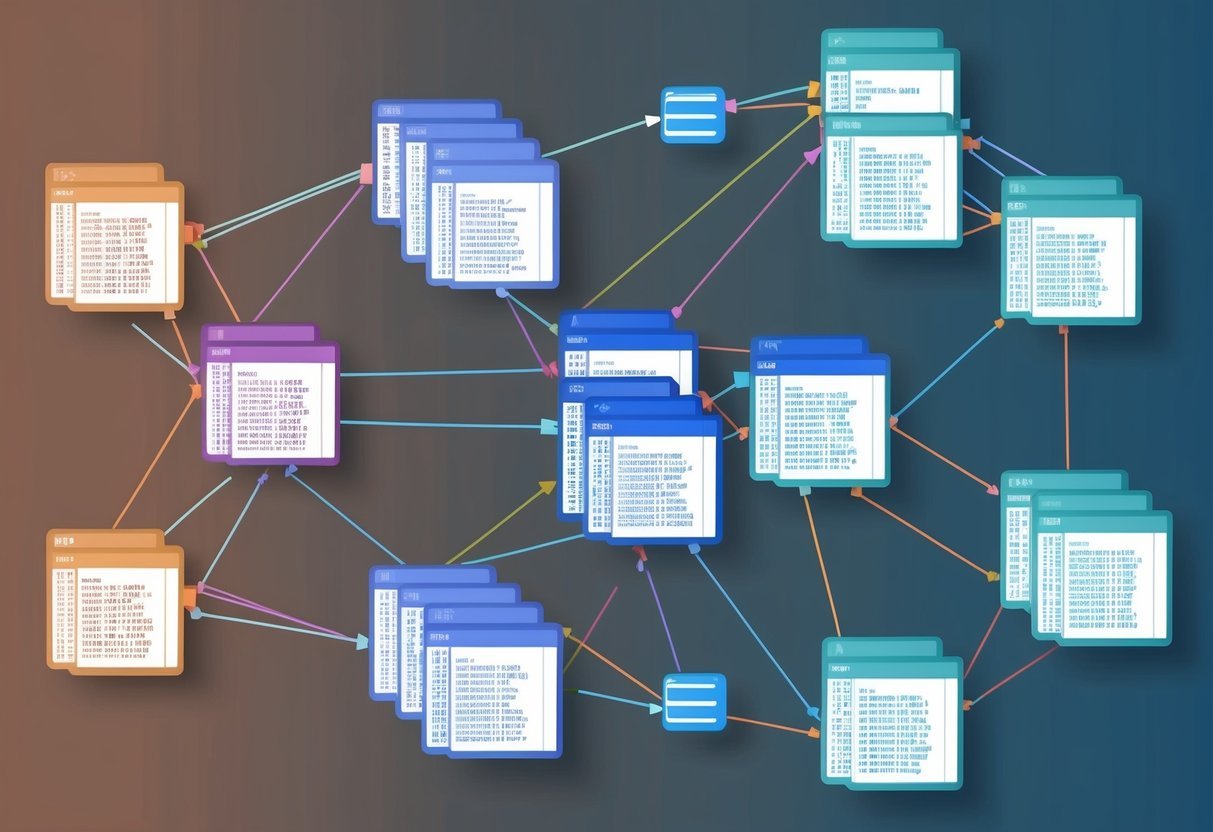
Normalization scales data to a common range, often 0 to 1. This is important for algorithms sensitive to the scale of the data.

Techniques like Min-Max scaling and Z-score standardization help in normalizing data. The sklearn.preprocessing library offers functions such as MinMaxScaler for this purpose.

Proper data type setup and normalization enhance the data preparation process, making further analysis straightforward.

Exploratory Data Analysis

Exploratory Data Analysis (EDA) is crucial for understanding and preparing data in data science. It involves looking for patterns, identifying anomalies, testing hypotheses, and checking assumptions.

Statistical Analysis Techniques

Statistical methods help uncover the structure of data. Key techniques include calculating measures such as mean, median, variance, and standard deviation. These metrics offer insights into the data’s central tendency and spread.

In EDA, correlation analysis is also a focus. Using correlation coefficients, analysts can measure how variables are related. These analyses can predict relationships and ensure data quality by finding inconsistent or unusual data points.

Unveiling Patterns with Visualization

Visualization tools like matplotlib reveal data patterns and relationships. They transform complex datasets into clear visual formats. Common types of charts include histograms, scatter plots, and box plots.

With data visualization, analysts can spot trends and outliers effectively. It’s a powerful process in data exploration, allowing for a deeper understanding of underlying patterns.

By visualizing data, they can communicate findings more clearly and enable better decision-making.

Data Manipulation with Pandas

Data manipulation with Pandas involves powerful techniques for modifying and analyzing large datasets. It includes manipulating DataFrames and using functions like groupby for complex operations. These tools allow users to transform raw data into valuable insights.

Advanced DataFrame Operations

DataFrames are central to performing advanced operations in Pandas. Users can filter rows using conditions, such as selecting data entries where a column value meets a criterion. Slicing of DataFrames aids in extracting specific parts of the data, facilitating targeted analysis.

Example:

import pandas as pd

df = pd.DataFrame({'A': [1, 2, 3], 'B': [4, 5, 6]})
filtered_df = df[df['A'] > 1]

The ability to add or modify columns provides flexibility. Adding derived columns based on calculations is a common need.

Using the apply function can perform operations on rows or columns. This can be useful in data preparation or feature creation.

Aggregation and Grouping

Aggregation simplifies data analysis by summarizing information. Functions like sum(), mean(), and count() provide quick insights.

The groupby function splits data into groups based on values in one or more columns, enabling simultaneous computation of statistics for each group.

Example:

grouped = df.groupby('A').sum()

Grouping is crucial when handling large datasets. For instance, grouping sales data by region or products reveals trends. This approach aids in identifying relationships and patterns. Understanding grouped data behavior is key for many data science tasks.

Feature Engineering

A laptop displaying a data science tutorial with pandas library open, surrounded by scattered papers and a cup of coffee

Feature engineering is crucial in preparing data for machine learning models. It involves creating new variables and transforming existing features to improve model performance. The process can involve techniques like feature selection, binning, and scaling, all of which are essential for effective data analysis and model accuracy.

Creating New Variables

Creating new variables, or feature creation, allows data scientists to derive additional insights from raw data. This can include combining existing features or breaking down complex ones into more understandable parts.

For instance, a date column can be split into separate columns for the year, month, and day, providing more granular insights.

Another approach is to use mathematical operations on features, such as calculating the ratio between two variables. These new variables can highlight hidden patterns or trends that weren’t apparent when viewing the original dataset.

Binning, which groups continuous data into discrete intervals, simplifies data analysis and uncovers relationships between variables.

Transforming Features for Modeling

Transforming features is essential to ensure that data is in a format suitable for machine learning models. This often involves scaling, where numeric features are standardized or normalized to fit a particular range.

Such transformation helps in maintaining the stability and performance of models, especially those sensitive to feature scales like k-nearest neighbors (KNN).

Another transformation technique is encoding categorical variables into numerical ones, often necessary for algorithms that require only numerical input.

Feature selection, which identifies and retains useful features while discarding irrelevant ones, enhances model efficiency by reducing complexity and improving prediction accuracy.

By carefully transforming features, data scientists enhance both the training speed and the predictive power of their models.

Improving Performance

A person working at a computer, analyzing and manipulating data using the Pandas library for data science. Multiple data sets and charts are visible on the screen

Enhancing performance when using Pandas for data preparation is crucial. It mostly involves optimizing memory and speeding up computations. Essential techniques include minimizing memory usage and utilizing vectorization to accelerate operations. These methods help in handling larger datasets more efficiently.

Optimizing Memory Usage

Reducing memory load is vital, especially with large datasets.

One effective method is data type adjustment. By changing data types to more efficient ones, memory usage decreases. For instance, use float32 instead of float64 for floating-point data if the precision is acceptable.

Another strategy is dropping unnecessary columns early in data processing. This avoids retaining irrelevant data that can consume memory.

Indexing is another important aspect; setting the index to the most relevant column can speed up lookups and reduce memory load.

Categorical data can further optimize memory, as converting strings to category types can save significant space.

Monitoring memory usage with methods like .info() ensures that data adjustments are effective.

These techniques aim to maintain performance while managing resources efficiently.

Vectorization for Speed

Vectorization in Pandas involves executing operations on entire arrays rather than individual elements, providing a speed advantage.

Utilizing libraries like NumPy is crucial due to its efficient handling of vectorized operations.

Vectorized operations replace slower Python loops with operations that run at C speed. For example, applying functions across a column without explicit loops can greatly enhance execution time.

Leveraging Pandas’ built-in functions that utilize vectorization also boosts performance.

Additionally, understanding function implications is crucial. Some functions may not support vectorization, leading to slower speeds.

Always prefer vectorized built-in methods for data manipulation. This approach ensures that data processing is both effective and efficient, maximizing Pandas’ speed capabilities.

Data Preparation for Machine Learning

Data preparation is essential for machine learning to ensure accurate models. It involves cleaning, transforming, and organizing data so that algorithms perform well.

Efficient data preparation can greatly improve the quality of machine learning results.

Data Preprocessing Steps

Data preprocessing is a key part of preparing data for machine learning. It includes several important tasks:

  1. Cleaning Data: Remove or correct any inaccurate records to ensure data quality.
  2. Handling Missing Values: Imputation techniques, such as mean or median replacement, fill gaps where data is missing.
  3. Normalization and Scaling: Adjust the data so that each feature contributes equally to analysis. This often involves scaling values to a 0-1 range or standardizing them to have a mean of zero and a standard deviation of one.
  4. Encoding Categorical Variables: Convert non-numeric categories into numeric formats using techniques like one-hot encoding.

These steps ensure the data is in the best shape for machine learning algorithms.

Integration with Scikit-learn

Scikit-learn is a popular library in machine learning that provides tools for data preprocessing. It has built-in functions to automate data preparation tasks:

  • Imputation: The library offers the SimpleImputer class for filling missing values effectively.
  • Data Transformation: With StandardScaler and MinMaxScaler, scikit-learn helps in scaling and normalizing data seamlessly.
  • Encoding: It supports transforming categorical data into numeric using OneHotEncoder.

These capabilities make scikit-learn a powerful tool for preparing data efficiently, reducing the time and effort needed to manually process data for machine learning models.

Understanding Correlations

Correlations are essential in data analysis, helping to identify the relationships between different variables. This section explores key metrics used to measure correlations and how to visualize these relationships effectively using plotting tools.

Correlation Metrics

Correlation metrics are measures used to assess how strongly two variables are related.

The most common metric is Pearson’s correlation coefficient, which ranges from -1 to 1. A value of 1 indicates a perfect positive relationship, while -1 indicates a perfect negative relationship. A value of 0 means no correlation.

Spearman’s rank correlation coefficient is another useful metric, particularly when dealing with ordinal data. It assesses the monotonic relationship between two variables.

Kendall’s Tau is also helpful for non-parametric data, offering another way to measure relationships without assuming normal distribution.

Choosing the right correlation metric is crucial, depending on the data’s nature and distribution. It helps in uncovering patterns that can be critical for predictive analysis and decision-making in data science projects.

Visualizing Correlations

Data visualization is a vital tool for understanding correlations.

Graphical representations like scatter plots provide a simple way to see relationships between variables.

Using tools like Matplotlib, one can create detailed visualizations that clearly indicate the strength and direction of a correlation.

Correlation matrices are also effective, displaying correlations between multiple variables in a table format. Heatmaps, which color-code the correlation values, make it easy to recognize patterns.

For interactive visual exploration, libraries such as Seaborn offer enhanced plotting capabilities integrated with Matplotlib, improving readability and interpretation.

Visualizations not only make the data more accessible but also help communicate findings clearly to stakeholders.

Advanced Visualization Techniques

Advanced visualization techniques in data science are crucial for gaining insights from data. Techniques like interactive plots enhance user engagement, while best practices ensure clarity and accuracy in data representation.

Interactive Plots with Matplotlib

Creating interactive plots can significantly enhance data visualization.

Matplotlib, a popular library in Python, offers tools to create interactive charts and graphs. These plots allow users to zoom, pan, and update data dynamically.

Interactive plots are beneficial in data science as they provide a deeper understanding of patterns and trends.

Using tools like mpld3, the standard matplotlib plots can be made interactive.

Embedding these plots in web applications or reports can further enrich data storytelling, giving analysts better control over the way data narratives are constructed.

Data Visualization Best Practices

Adhering to best practices in data visualization ensures that the data is both clear and informative.

It’s essential to choose the right type of visualization for the data being analyzed. For instance, line charts are great for time series, while bar charts are suitable for categorical data.

Clarity is crucial, so avoiding clutter is important. Limit the use of unnecessary elements such as heavy grid lines or excessive colors.

Proper labeling and scales help in accurately interpreting the data.

Tools like Matplotlib provide options to customize plots to follow these practices effectively, ensuring that the final output is both visually appealing and insightful.

Learning Resources and Next Steps

For those eager to master data science with Pandas, plenty of resources are available to guide the journey. These include comprehensive Python courses and books, and opportunities to practice coding with online platforms.

Python Courses and Books

Several books provide detailed insights into using Pandas for data science.

“Python for Data Analysis” is popular for beginners and experts alike, offering step-by-step guidance on data wrangling and feature creation. If hands-on learning is preferred, “Hands-On Data Analysis with Pandas” can be quite helpful for practical applications.

Both books cover essential principles of Pandas, NumPy, and IPython.

Online courses complement these books by providing interactive learning. Many platforms offer courses that introduce the Pandas library and Python fundamentals. These courses often include projects for students to apply what they’ve learned, which can boost their coding experience.

Practicing with Online Platforms

Online platforms like Google Colab offer a practical environment to practice coding with Pandas.

Google Colab enables users to write Python code in a collaborative notebook interface. This is great for hands-on experience, as users can run code online without setting up a local environment.

Furthermore, websites like Kaggle provide datasets and challenges to sharpen data analysis skills.

Participating in these challenges helps apply skills in real-world scenarios, improving proficiency in utilizing Pandas for data manipulation.

These platforms are perfect for continuous learning and application in data science projects.

Frequently Asked Questions

A person working at a computer, using pandas library for data science, with charts and graphs on the screen

In data science, using Pandas for data preparation and feature creation is essential. Many want to know how to use this tool to its fullest. This section answers common questions about creating new features, handling missing data, and finding the best learning resources.

How can I create new features from existing data using Pandas?

Creating new features involves using Pandas functions like apply(), map(), and transform(). These can modify existing columns or combine them in new ways.

Methods like groupby() allow users to aggregate data, creating new insights from existing datasets.

What are the best practices in data preparation for data science with Pandas?

Best practices include cleaning data by removing duplicates and handling missing values.

Consistent data types across columns are important. Using astype() can help convert data types.

Ensure data is normalized and consistent, which helps in making accurate models later.

Where can I find a comprehensive tutorial for learning Pandas for data analysis?

Books like Learning pandas provide detailed insights.

Online platforms like Coursera and DataCamp offer step-by-step tutorials. These resources include examples of real-world applications, making it easier to understand.

What steps should I follow to master Pandas in the context of data science?

Start with basic operations like loading and filtering data.

Practice using functions like merge(), concat(), and pivot_table() for data manipulation.

Explore advanced functions such as apply() for custom transformations. Consistent practice on datasets will solidify skills.

How do I handle missing data when preparing my dataset with Pandas?

Handling missing data can be done using functions like fillna() and dropna().

Decide whether to fill missing values with the mean, median, or a constant value, or remove them altogether.

Consider the impact on your analysis and choose the right approach.

Can you suggest any resources for advanced data manipulation techniques using Pandas?

Hands-On Data Analysis with Pandas provides advanced techniques like data wrangling and visualization. It also covers using Python packages to extend Pandas capabilities. This resource is excellent for those already familiar with basic operations and looking to deepen their skillset.